After 18 months of quiescence, on the night of July 3, 1990, the offender returned and proved that no amount of wealth, security, or social status could keep him out.
Bypassing the working-class outer suburb he had previously hunted in, this time the offender hit the most expensive street in one of the wealthiest suburbs of Melbourne.
The inner city suburb of Canterbury is one of the epicenters of Melbourne's old money and elite. And it was here that an English family of four were renting a home. They were in Australia temporarily, on secondment from London where the girls’ father was a senior partner with the global accounting and services firm, Price Waterhouse. The family had been in Melbourne for about four years, and were due to return to England that very weekend. The parents had been picked up by friends and taken out to their own farewell dinner.
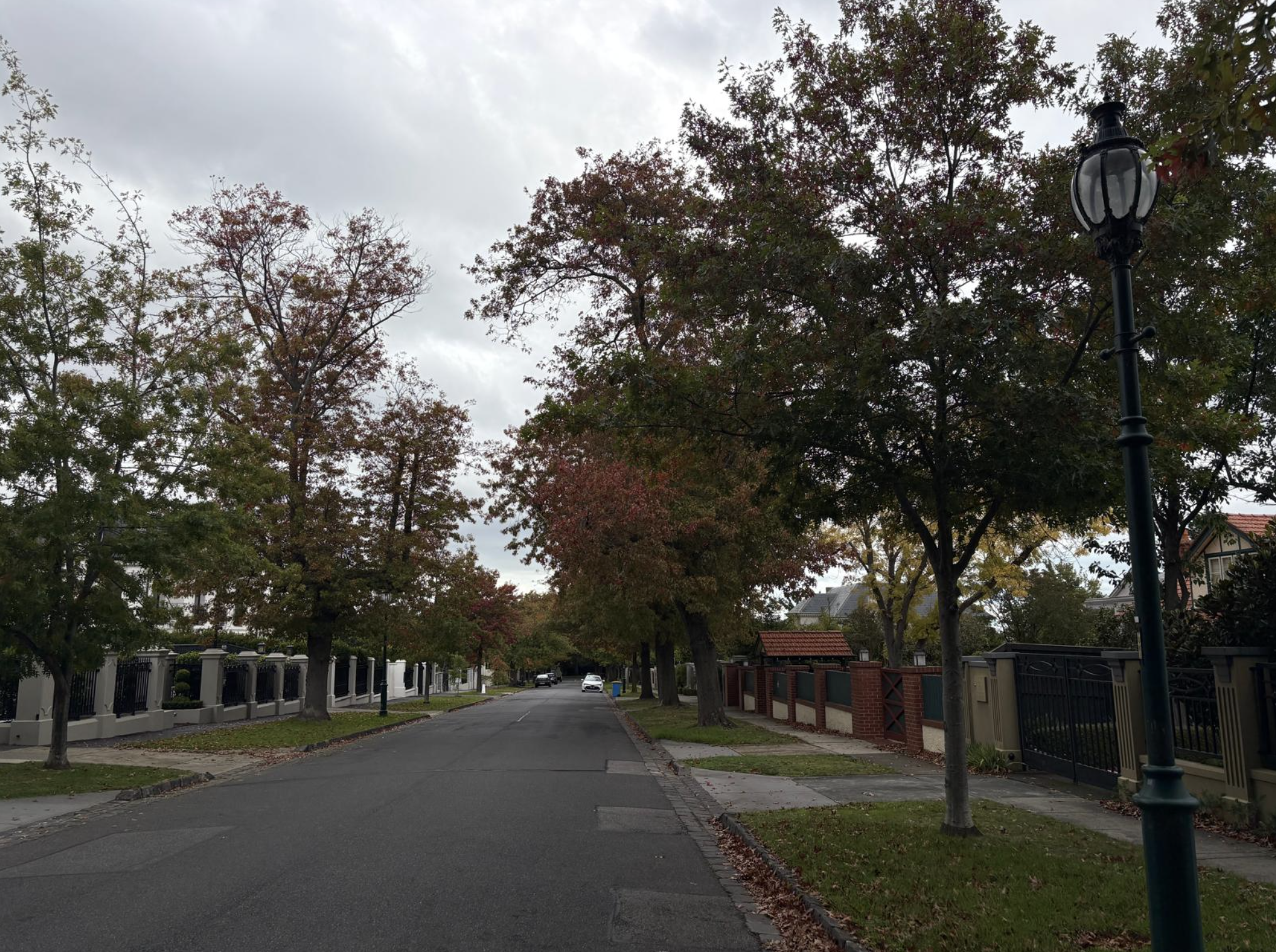
Their two teenage girls were responsible, mature, studious and completely trustworthy. The parents had no qualms leaving them home alone in their quiet, tree-lined street.
After ordering pizza for dinner, the two girls went to be around 10pm. At the last minute, the 13-year-old decided to drag her mattress into her sister’s room so they could spend their final night together in the rental house. The following day they were due to hand the keys back and move into a hotel for their last few days in Australia.
But around 10.40pm, and only about half an hour after falling asleep, the 13-year-old was rudely awakened by something hard tapping her on the head. It was a handgun brandished by an intruder wearing a dark coloured ski mask. “See this”, the man said gruffly, as if channelling Clint Eastwood from Dirty Harry, “It’s a real gun. It shoots real bullets. It’ll blow ya head right off!”
A large knife occupied his other hand.
Terrified, the two sisters, like the parents of the previous victims, saw no option for escape, and so they unwillingly complied with the offender’s instructions.
The intruder hog-tied the older sister to the bed. Simultaneously, he instructed the younger victim - and referring to her not only by name, but by her nickname used by her friends and family - to get dressed and gather specific items of clothing, including her school uniform from the prestigious private girls’ school she attended.
He rifled through the family’s personal effects, stealing identification documents, including the driver's licence, bankcard and medicare card belonging to the victim's mother. He ignored $4,000 in traveller’s cheques.
Whilst selecting items to steal, he made small talk with his victims and displayed a particular interest in their father and his line of work. Before leaving the 15-year-old tied to the bed, he told her to pass a message to her father and let him know that he was taking his youngest daughter for a $25,000 ransom.
This amount, which is approximately $60,000 Australian or $40,000 US in today’s terms, was surprisingly small considering the effort and planning the offender had invested, especially given the family’s wealth. For context, the house they were living in would today be valued around $5 million dollars. The intruder said he would call the following day to provide instructions about how he could collect the ransom.
Then, with an arm gripped around the 13-year-old’s shoulders, he firmly directed her through the house and boldly out the front door, into the light of the near-full moon overhead. Before leaving, he grabbed the keys to the family's rented sedan, which he used as his getaway car.
When the girls’ parents returned home from dinner around midnight, they discovered their car was missing from the carport and the front door was open. Inside, they quickly found their oldest daughter gagged and tied up on her bed. The phone lines had been cut.
The next day, Melbournians woke up yet again to a news story about a kidnapped girl and urgent pleas for public assistance. Links were immediately drawn to the abduction of the 10-year-old girl from Ringwood 18 months prior.
The Vehicle Swap
At 3pm that afternoon, the family’s car was found abandoned just a few streets away from their home. In a move more typical of an armed robber, the offender had pre-parked a second getaway car at this location to make a transfer of his 'stolen goods', in this case, the teenager, from their car, to his.
Not surprisingly, the street chosen for the transfer was exceptionally “leaky.” Within just meters of the dumped car lay a large formal English garden with multiple winding paths, a park, a train station, the train line itself with hidden foot trails running alongside it, a narrow foot underpass, and two vehicles underpasses. Many of these led to what is now called the “Anniversary Trail”, a pedestrian and cycling path that follows the tracks on an old steam era railway line that was closed in 1897, but forms a circuit with other trails as it traverses nearly 20 suburbs.
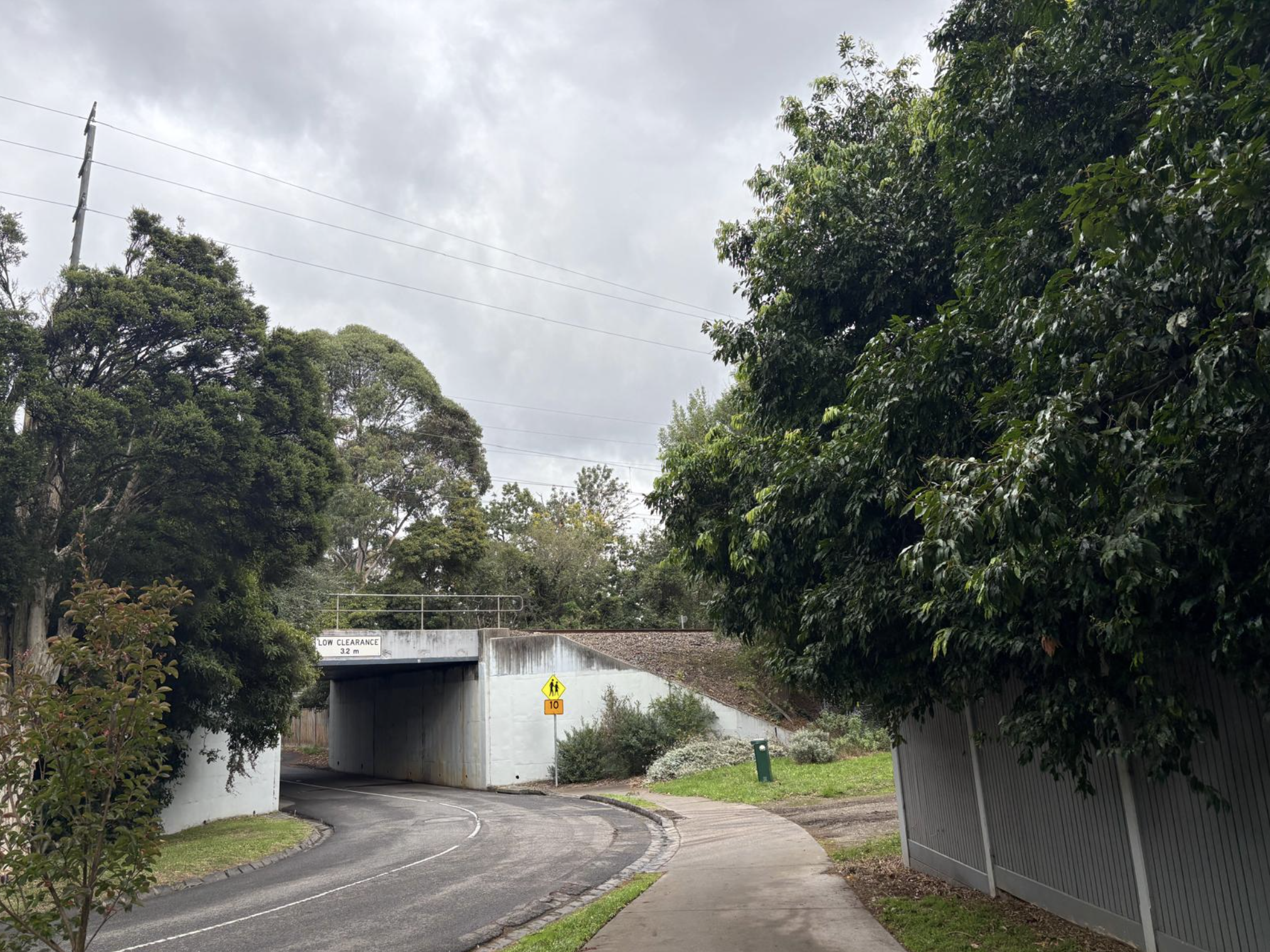
Unfortunately, nothing in the abandoned car provided any clues to the girl's whereabouts.
The public plea
With the knowledge that the prior victim was eventually released, there was widespread hope that this girl, too, would be returned relatively unharmed the following night. But as daylight broke on Thursday morning and with still no sign of her or any contact regarding the ransom, police decided to put the girl’s father in front of the news cameras to try and initiate a dialogue about the ransom money in exchange for her safe and swift return.
The media, of course, had its own agenda, and it seemed that a few journalists were secretly hoping the parent paraded on camera would be extra emotional and charismatic.
The victim’s father, however, did not deliver. There were no swear words or colourful descriptions of what he might want to do to the offender. Instead, he softly and calmly articulated that he felt no resentment toward the kidnapper and that his sole focus was on his daughter.
The journalists failed to recognise just how carefully those words had been chosen. A psychopath had this man’s daughter, and he was clearly walking on eggshells to avoid saying anything that might anger the offender or make him feel that murdering his victim was his safest bet. Unhappy with this level of composure, some journalists challenged his lack of obvious anguish, interrogating him about a bizarre theory that the entire event was a hoax instigated by both daughters to delay their return to England.
But he again strategically beat them at their own game, handling these appalling questions with aplomb while being careful not to get them offside. He knew he still needed their help. So he let them deliver their smug lines about an elaborate hoax, paused, and then replied: "Well, she is not with us. And we don’t know where she is."
Police obviously backed up his sentiments, expressing no doubt that this was a very real abduction by a very real offender. They reiterated their belief that the offender was linked with other crimes against children, including the 10-year-old girl from Ringwood and the 11-year-old girl in Lower Plenty in 1987.
About 12 hours later, in the early hours of Friday morning, some young adults two suburbs away in Kew, were unexpectedly woken up around 2am by a knock on the door.
Standing on their doorstep in the cold winter air, and wrapped only in a blanket, was the teenage girl whose photo adorned the front page of the newspaper sitting on their kitchen table. She asked to use the phone to call her parents.
The convergence of offender, victim and high voltage power
The girl would later tell police she had been driven to her release site from the detention premises, whose location she did not know.
The offender had removed her from the car and walked her, still blindfolded, to a nearby site, believed to be a local park, where he made her sit down on the ground. He then changed his mind, and had her walk for a few more minutes along a footpath before having her sit in front of an electricity zone substation with her head down between her knees. He told to count to one hundred before she could remove her blindfold.
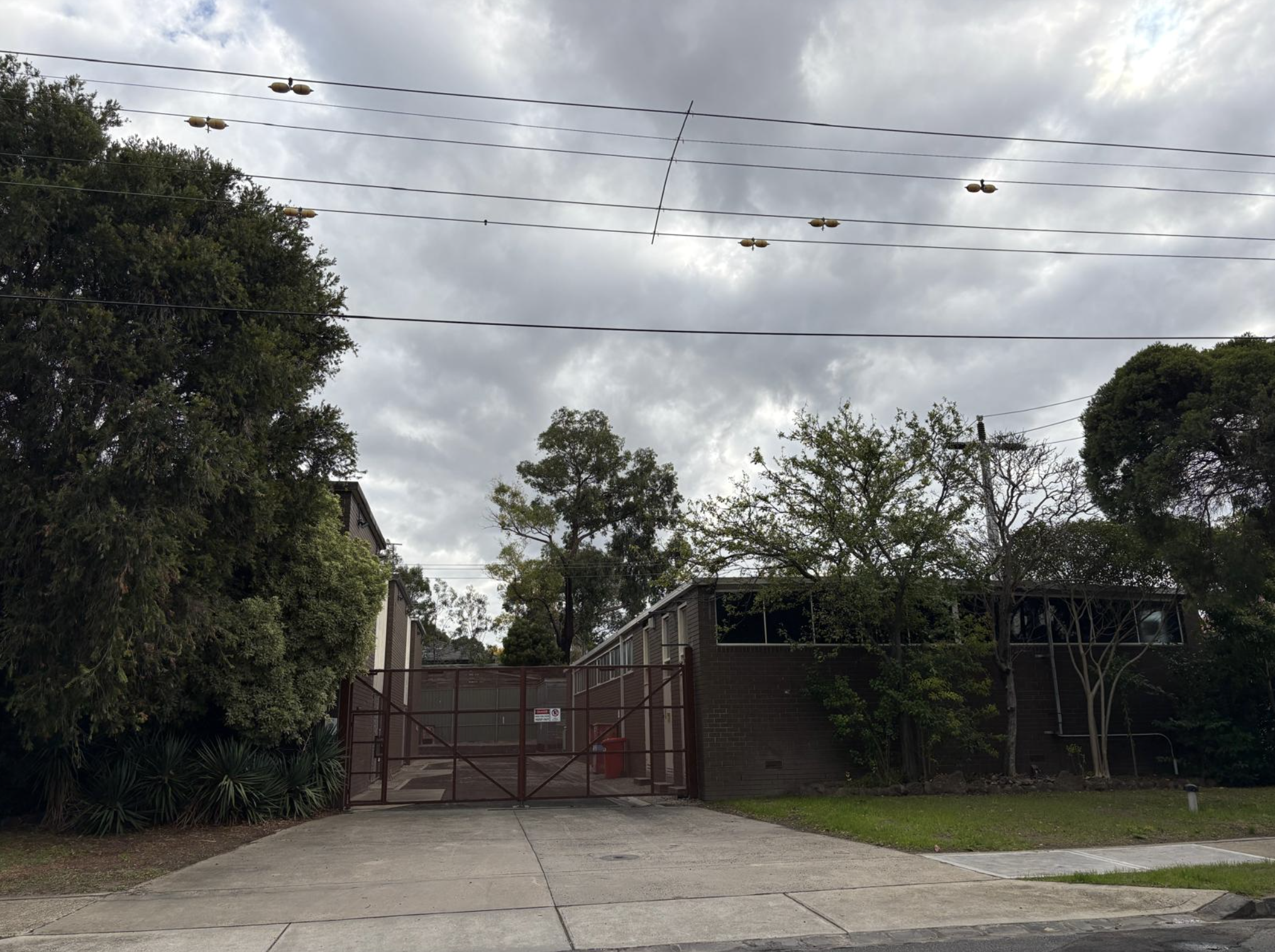
The choice of this location is interesting. It certainly met the offender’s apparent criteria for avoiding parking his car directly outside people’s front windows. But so would many other places.
Zone substations, however, are not very common, as each one supports the distribution of 66kV high-voltage power to about 10,000 to 15,000 properties. Only about one in every five suburbs have them.
And if you've ever walked past one in the quiet of night, you’ll notice something that their nondescript brick walls and fences cannot hide… They hum. And at nighttime in a quiet residential street, they hum very, very loudly.
Outside the substation, when the victim eventually reached a count of 100 and removed her blindfold, she could not see the offender and had no idea where she was. She took the initiative to go and wake the residents up at a nearby house. When the police arrived a short time later, they found her sitting on the couch in the living room under the close watch of random, concerned citizens.
The girl had been held prisoner for 50 hours. It was her 14th birthday.
Like the previous 10-year-old victim, this now 14-year-old was able to provide incredibly detailed information about her time in captivity. She told police that when being forced out of her house, the kidnapper made her hide in the footwell of the front passenger seat of their family car. She was adamant that the direction they reversed out of their driveway took them away from the location where police would later find the car the following day. This matches her belief that the kidnapper was intentionally trying to disorient her by driving around in circles for about 10 minutes. When they finally stopped, which, unbeknownst to the victim, was just a few streets away from where she lived, she was blindfolded and then transferred to a pre-positioned getaway vehicle.
The victim could hear that the kidnapper had trouble starting it, and the kidnapper commented that stolen cars were hard to start. She astutely detected a note of either nervousness or embarrassment in his voice, which suggested the vehicle actually belonged to him.
Once inside his car, she was driven for another 30 minutes or so to an unknown detention premises. There, she was assaulted over the course of three days and restrained to the bed via a neck brace. Unlike the previous victim, she had no opportunity to view her surroundings, but she was able to commit the bathroom layout to memory, gathering its details entirely by touch.
From a behavioral perspective, this most recent victim had a similar experience to the 10-year-old before her. She, too, described the offender’s behavior as conflicting, due to the unexpected gentleness and acts of kindness he displayed. He provided her with food and drink and was described as "chummy," as if he were fantasising about being in a relationship with her.
She noted his keen interest in the media attention he attracted. He clearly enjoyed the notoriety. Each day he would leave her tied up, only to return later with all the daily newspapers. He would then sit and discuss her own abduction with her, even asking if she thought she was worth the announced $25,000 ransom. At one point, while listening to a news report about himself, he casually remarked that he could not have been responsible for the abduction of the 10-year-old girl from Ringwood 18 months earlier, because he was interstate at the time.
Predictably, the victim was thoroughly bathed and cleaned multiple times. More disconcertingly, however, she was also given a running commentary about forensics and exactly how the investigation would proceed after her release. He used official and correct terminology, like "police surgeon" to describe the title of the doctor who would examine her, a title that most members of the public would not have been familiar with.
Police began referring to him as one of the cleverest criminals they had ever encountered. He had seemingly avoided leaving behind any body tissue, pubic hair, blood, or semen eon his released victims. His consistent use of red herrings, like fake ransom demands and staging his attacks to look initially like robberies, continued to worry investigators. They saw he was experienced and smart, and they expressed great concern over his extreme motivation to conceal his identity.
But despite reiterating their belief that this was the same offender responsible for the Lower Plenty and Ringwood attacks, they remained silent about all the attacks that had occurred prior.
Mr Cruel, the moniker, is born
It might come as a surprise that it was only at this point that the offender was anointed with the title of Mr Cruel. The sensationalist nickname was, of course, coined by a journalist. Police detested it, and for good reason. They worried it would cause the public to imagine the offender as an evil cartoon caricature, making them less likely to report genuinely suspicious suspects who looked perfectly normal. If any nickname were to be given to this offender, "Mr Cool" would have been more appropriate.
Despite the teenager’s release, police soon found themselves increasingly busy.
Just days later, a 23-year-old woman was kidnapped from a train station car park in the southern bayside suburb of Frankston, an area that had been disproportionately targeted by some high-profile serial killers in recent years.
Tapping into the worry felt by many women and parents across Melbourne, a newspaper article went beyond the details of this new case and more broadly discussed the issue of sexual violence against women. In doing so, they drew a very unusual parallel.
The article showcased two significant, yet historically separate, unsolved crimes side-by-side.
First, it reviewed the Tynong North and Frankston murders, a series of six linked kidnapping and sexual homicides that took place in the early 1980's. The victims were all snatched off the street and ranged in age from 14 to 72. The offender then seemingly "disappeared".
The article then detailed the sophisticated Mr Cruel attacks that began a few years later, and which are still considered the largest series of unsolved kidnappings and sexual assaults in the country.
It would be 36 years before this parallel would ever be made again.
Why?
Because these two sets of crimes have been considered so fundamentally different - one committed by a serial killer/rapist and the other by a paedophile/rapist - that they are generally not discussed in the same conversation, by the same people.
They really should have been.