
In the early hours of December 27, 1988, Mr Cruel completely changed his modus operandi.
Until this point, we had been told that the offender had either kidnapped teenagers off the street, or broken into homes, subdued the occupants, and committed his assaults on-site before slipping away into the night. But at 5.30am on this Tuesday morning, he broke into the Ringwood home of a young family of 6, and did something entirely unprecedented. He subdued two adults at gunpoint, tied them up, and then brazenly carried their 10-year-old right out the back door, abducting her to a secret detention premises where he held her captive for 18 hours.
At the time, police and forensic psychologists viewed this dramatic shift in his MO as a very concerning escalation. They still assumed he was a localised rapist, but one who was spiraling out of control, desperately seeking more of a thrill.
But I’m not so convinced this was some sort of frantic escalation driven by a loss of impulse control. I think it was a highly calculated risk-management strategy by a veteran predator.
In 1988, DNA forensic technology was making rapid gains and just entering laboratories. Given this offender appeared to be well-read, he would have known that if he continued committing prolonged assaults in his victims' own homes, he was going to leave behind biological evidence that would eventually trap him.
By abducting his victims and taking them to his own meticulously prepared, controlled environment, he eliminated that risk. He dictated the terms. And he could spend all the time he wanted removing forensic evidence from his victims before releasing them back to freedom.
And just like his previous attacks, the home he targeted in Ringwood was not chosen at random. It perfectly matched the highly specific, ritualistic parameters that can be observed in the earlier attacks. Except no one did seem to observe the pattern.
The leaky terrain and attraction to high-voltage power
The Ringwood family lived in a modest weatherboard house on a quiet street directly off a main road. But the property's most defining feature lay just beyond the back fence. Because barely 10 meters away, 2 massive metal pylons jutted into the sky, supporting a pair of Victoria’s 220kV high-voltage power transmission lines. The house was literally positioned in their shadow.
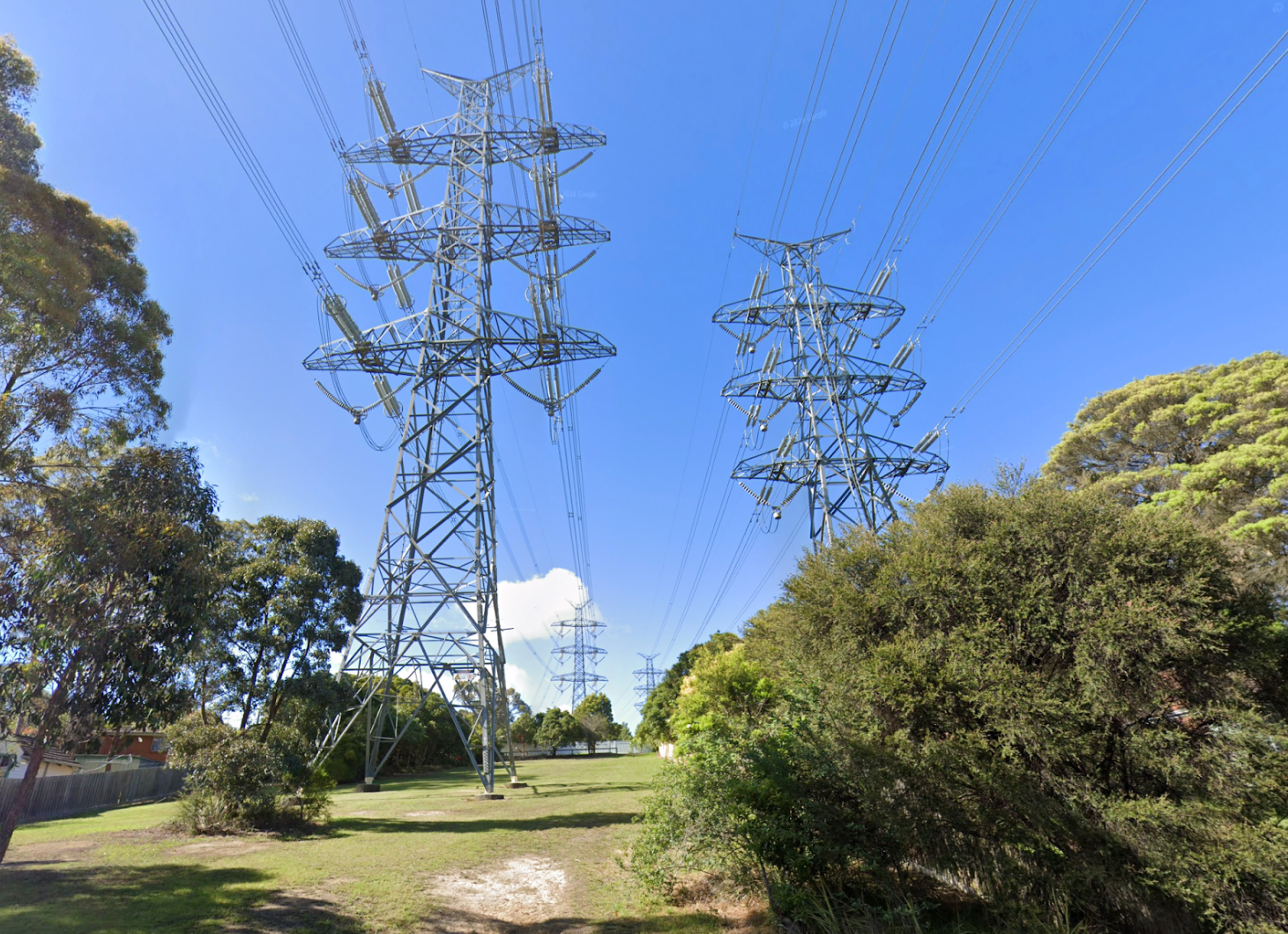
Directly below this infrastructure was the accompanying "leaky," vegetation-free corridor that the offender could have used to traverse the suburb unseen. Dozens of families in this neighbourhood had the State Electricity Company as their neighbours along their bank fence, and an easement on their own properties that granted limited access to the state.
It was Boxing Day evening when the offender decided to pounce.
The father of this family of six was suffering from some insomnia, and couldn’t sleep. Instead of spending hours staring up at the ceiling from his bed, he chose to quietly put together a jigsaw puzzle his daughter had received for Christmas. The house and surrounding neighbourhood was quiet as he matched the pieces together, but around 3am he got a sudden feeling that he was being watched. He peered outside through the horizontal venetian blinds that covered the glass external door, but not seeing anyone or anything out of the ordinary, he returned to the puzzle, completing it around 5am.
The offender was obviously waiting in the shadows this entire time.
This delay gives us insight into his incredible patience. This was not an impulsive offender, and he waited an additional 30 minutes before making his move. By this point, sunrise was only another 30 minutes away, and twilight had begun. He didn’t care.
He quietly broke into the house via the locked backdoor, and then instantly flicked on his aggression as he burst into the master bedroom, switching on the light as he entered.
The woman screamed in terror at the sight of the masked intruder, clad in blue overalls like a bank robber, handgun raised, knife ready in his other hand. As the man ran around to the other side of the bed where her husband had only been asleep for about 20 minutes, she screamed to her children, or perhaps to the intruder, to get out of the house.
The intruder shoved the cold, steel barrel of his handgun on her husband's temple, and threateningly said:
"Tell her to be quiet!"
The woman stopped screaming, frozen in fear.
“You’re not going to be a hero, are you?” the intruder mockingly and threateningly asked her husband.
Unable to find a way out of this situation to gain the upper hand, the man shook his head no.
The intruder forced the couple to lie face down, tying their ankles and wrists with copper wire. The confidence in his tone did most of the work. There was no shouting and no panic. The two adults knew they were no longer in control of their own household.
The intruder asked where their money and valuables were kept, assuring them this was just a robbery and he would be on his way once he had his goods. The woman explained where her purse was, but the intruder soon returned to the bedroom saying he couldn't find it. The woman provided some more possible options. It was not a big house and there were very few places it could have been. She expressly told him there was no money or valuables in the second bedroom.
The intruder then blindfolded and gagged them with surgical tape.
Leaving the couple restrained in their own bed, the intruder went to the second bedroom, where their four daughters slept across two bunk beds. The offender called out to the oldest girl by name, made her get out of bed, blindfolded her, and wrapped her in one of her father’s jackets.
Then, with just $35 stolen from a wallet and the purse he had clearly located, he brazenly carried the little girl right out the open back door and into the near-daylight. He stopped only briefly to stuff a ball in her mouth after she screamed.
It took her parents another 15 minutes to break free from their restraints. They found the intruder gone, but their oldest daughter missing. Her father grabbed the phone to call the police, but the line had been cut. He frantically ran to the house next door to raise the alarm. When the police arrived, they were greeted by the heart-wrenching sight of a young father desperately running up and down the street, screaming his daughter’s name.
The Media Frenzy
Melbournians woke up that morning to a shocking and unprecedented news story being blasted out on the radio and TV. Normally, when children go missing, there is a period where police assume the child is just temporarily unaccounted for. They might have run away without any long term intentions, or forgotten to tell one of their parents they were staying at a friend’s house.
But there was no mistaking that this girl had been violently kidnapped by an armed intruder.
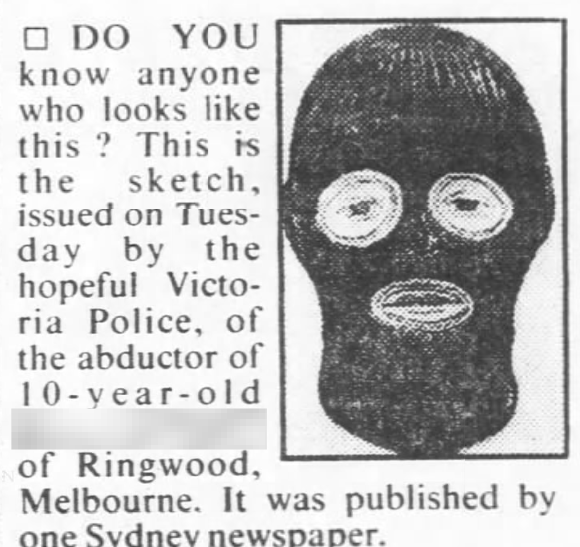
In the initial hours, police worked under the belief that the motive was burglary and that the thief had an unplanned reason for suddenly taking the girl. They hypothesised that he may have removed his balaclava and she had seen his face, or perhaps he was upset about the small amount of cash kept in the house, and had taken the child for ransom.
Neighbours reported seeing a prowler in the area. Police asked for people to report any unusual activity noticed over the previous 3 weeks. Two local boys would later report seeing a man six weeks prior, filming over the back fence from the electricity reserve behind the house, before leaving the area in a gold-colored Ford sedan.
But by later that afternoon, police began to realise the burglary was a ruse. They discovered that missing along with the 10-year-old was not just the small amount of cash, but also two of her skirts, a blouse, a pair of pants, and some underwear.
The offender had also broken into the house by taking advantage of a common human-created weakness in the double-cylinder deadlocks that are common in Australia. He slipped some paper under the locked back door, and, using some sort of implement in the keylock, pushed out the key that was in the lock on the inside. The key fell to the ground and landed on the paper, which the offender gently fed back under the door. From here, he was free to simply unlock the deadlocked back door with the family’s own key.
It’s a little too savvy for a run of the mill burglar content with $35. This offender had clearly been surveilling the house for some time and knew what he was doing.
The victim’s school photo was quickly flashed all over the news. Police responded swiftly to public sightings, searching areas fruitlessly for any sign of the missing girl. While police were clearly doing their best to rescue her and bring her home alive, there was a quiet consensus that the situation was dire, and it was unlikely she would ever be seen alive again.
But at 11.45pm that night, a motorist driving home from work spotted a small figure on the side of a quiet street in Bayswater, two suburbs away. As she pulled closer, she saw a child, shoeless, and wearing a man’s shirt. The motorist stopped to help. The small child calmly told her her name and explained that a man had taken her from her home the night before.
The motorist, not far from her own home, took the victim with her and called the police.
Over time, we would learn that this 10-year-old observed and retained a level of information about her 18 hours in captivity far beyond what would be expected of someone her age, particularly one enduring such a traumatic experience.
She would tell police that she had been carried away from her house for an unknown distance. She felt the kidnapper was trying to confuse her by making changes in direction and occasionally spinning around. Eventually, she was transferred to a car where she was placed in the footwell of the front passenger seat. Although blindfolded, she wasn’t blindfolded very well and had some visibility at times. The offender noticed this at one point, asked whether she could see, and when she admitted she could, he stopped and adjusted the blindfold.
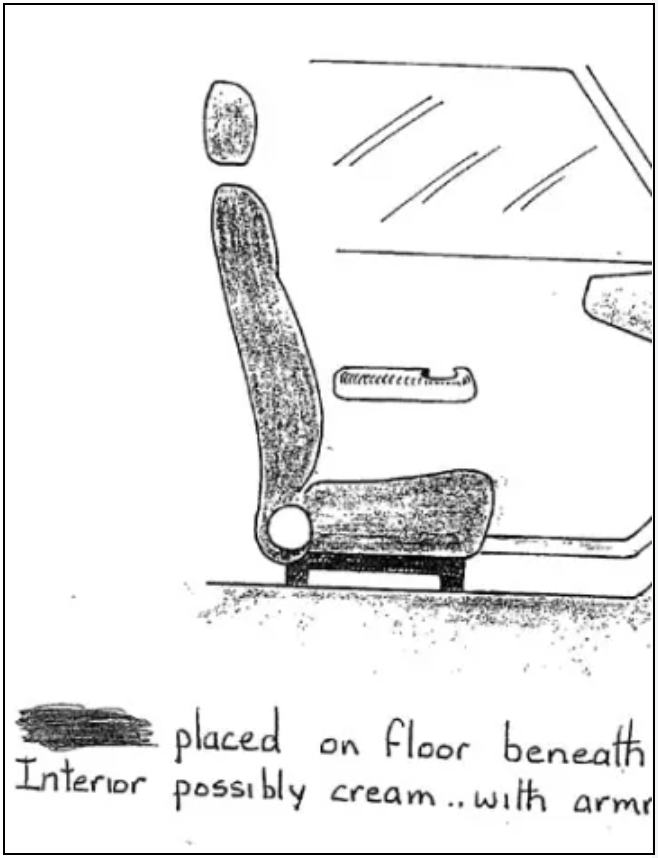
She was driven for about 45 minutes to a detention premises, where she was immediately made to bathe and then assaulted over the course of the day. Curiously, despite the aggression shown to her parents during the kidnapping, and the roughness and foul language she observed during the abduction itself, the victim described the offender’s underlying demeanor toward her as gentle and kind during the rest of her time in captivity.
Astonishingly, and at great risk to her life, the victim seized an opportunity when the offender was out the bedroom to peek out from under her blindfold. In that fleeting moment, she committed significant details to memory, including the layout of the room, and the color and pattern of all the textiles. However, police would not reveal much of this information for many years.
Ahead of her release, the victim was thoroughly cleaned and bathed again, in a final attempt to remove any forensic evidence. Before being taken away from the detention premises, she was wrapped in clean garbage bags, with holes punched through them for her limbs and head.
The offender’s extreme forensic knowledge continued to be a major talking point. Police, media and the public furrowed their brows and scratched their heads over how this offender could possess such specialised knowledge. Yet it seems they simply weren’t reading the science section of the newspaper like he was.
At the release site, which was a high school not far from her home, the blindfolded victim was taken out of the car and carried for quite some time. She reported that the offender occasionally entered a jog and intermittently stopped to rest before finally setting her down near the front of a high school, which faced a row of houses on the opposite side of the residential street. He removed her blindfold and the garbage bags, leaving her wearing just a long shirt, and instructed her to go to a nearby convenience store to call for help.
The closest open store would have required the victim to have walked barefoot down a deserted road, and then cross a multi-lane highway alone at night. Not that it mattered, because she didn’t know where it was. She also didn’t know where she was.
Unsure what to do, she just started to walk, hoping someone would come to her aid.
The driver who later spotted her and picked her up off the side of the road, found her 400m away from where she had been released, and in the opposite direction to the convenience store.
The Missing Police Information
While it’s never been reported where the offender may have parked his car, it seems likely they entered from the back of the school. This aligns not only with his future pattern of avoiding parking outside occupied houses, but also with the amount of time the victim described being carried before being set down at the front of the school.
It’s impossible to ignore that the school he selected shared many environmental characteristics with his previous attack locations. Running immediately behind the school’s sports oval was the Dandenong Creek, a major waterway that runs through the southeast of Melbourne. Adjacent to it was bushland and trails, a railway line, a dark and dingy foot underpass connecting the school to the other side of the tracks, a footbridge across the river, and most importantly, a 66kV high voltage sub-transmission power line.
These power lines don’t dominate the horizon like the enormous 220kV towers do, and most people probably couldn’t distinguish them from any other power pole. But those with an interest in power lines, certainly would.
Unlike regular distribution lines, sub-transmission lines still require the area below them to be cleared of trees and shrubs, creating vegetation-free corridors and "leaky" paths and trails. And just like their higher-voltage cousins, they also hum.
Interestingly, had the offender entered the school from the rear of the property, the closest place he could have parked his car was in a tree-lined and bushy dead-end street on the other side of the river, right underneath these high-voltage sub-transmission power lines. From there, it would have been a quick walk over the Dandenong Creek footbridge, then along a path on the opposite river bank, and then under the railway track via the underpass that led into the deserted school grounds. It doesn’t get much leakier than this.
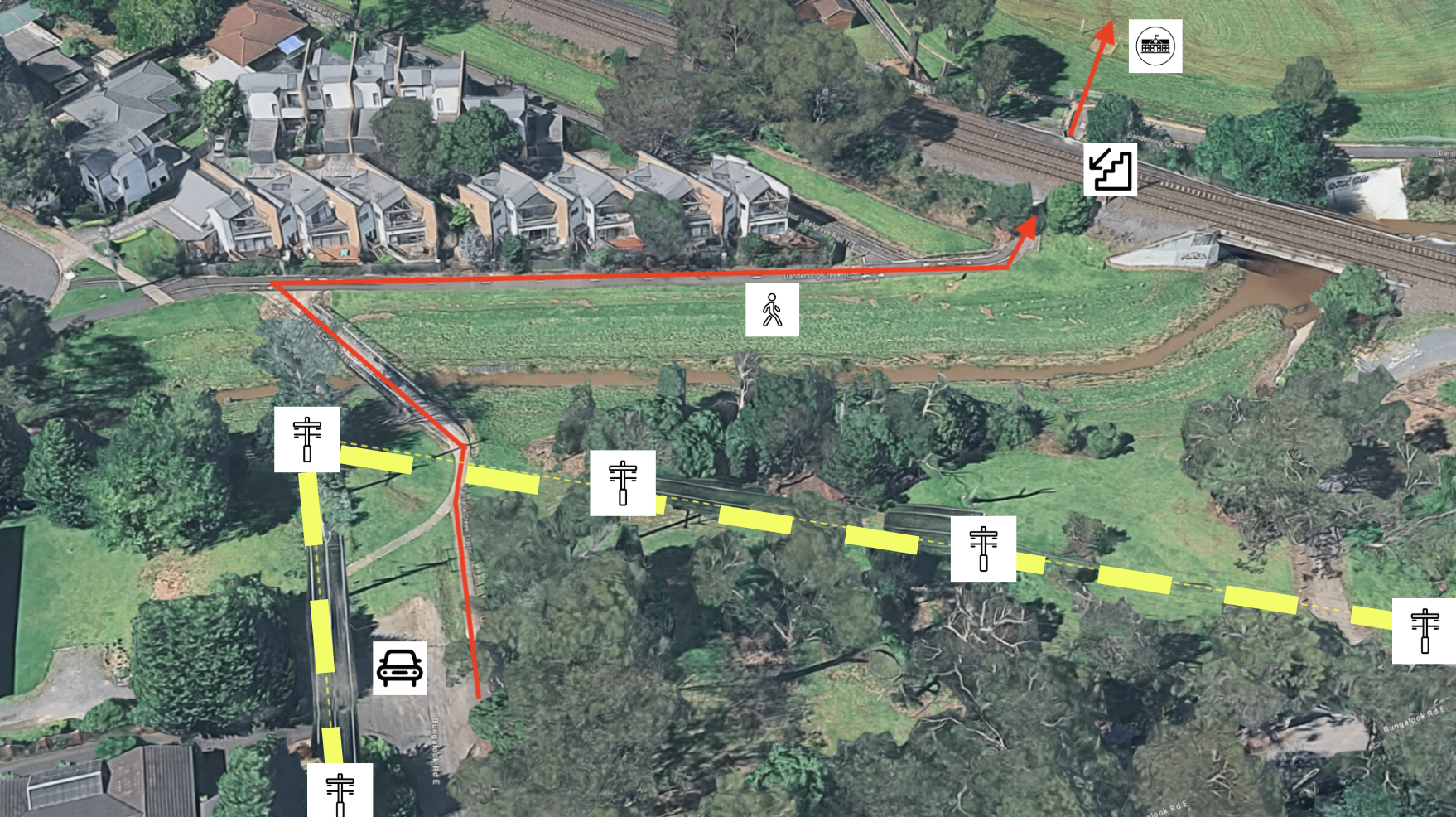
Yet for nearly forty years the police have failed to provide any details about the logistics of this victim release. And it’s not like this was a blanket blackout on information. They chose to readily describe how the 10-year-old was wrapped in garbage bags, but for some reason would not say where the offender parked his car.
But silence isn’t neutral. People make assumptions from silence. And in this case, that assumption is that the offender stopped somewhere at the front of school.
But not all police silence was so unnoticeable.
During that 1988 Christmas period, the official police position changed. They publicly linked this Ringwood attack to the one in Lower Plenty 15 months earlier. But for some reason they no longer wanted to talk about the details of those earlier attacks from the same area.
When challenged by the media, the head of the police crime department, Chief Superintendent Kevin Holliday, gave a vague and avoidant response, claiming to not have been in a position to specifically state what previous offences this offender may have committed.
Yet just 7 months earlier an article was published in the paper, where police said that they were looking for links between the Lower Plenty attack and up to 20 attacks on children AND adults since 1985.
This change appeared to be so recent that the memo hadn't even had time to circulate through Victoria Police. Because almost at the same time Holliday was clamming up at the press conference, Chief Inspector Des Johnson was standing on the footpath outside the high school giving an impromptu interview that included the details of those precursor attacks.
But what no one was being vague about was describing the risk that this offender posed.
The police commented that had the Ringwood victim removed her blindfold and seen her attacker’s face, that she might have been murdered.
They said “We can only dread what the man would have done if the girl had pulled off the blindfold and seen his face. It is that close to being a homicide. It is only an extra step.”
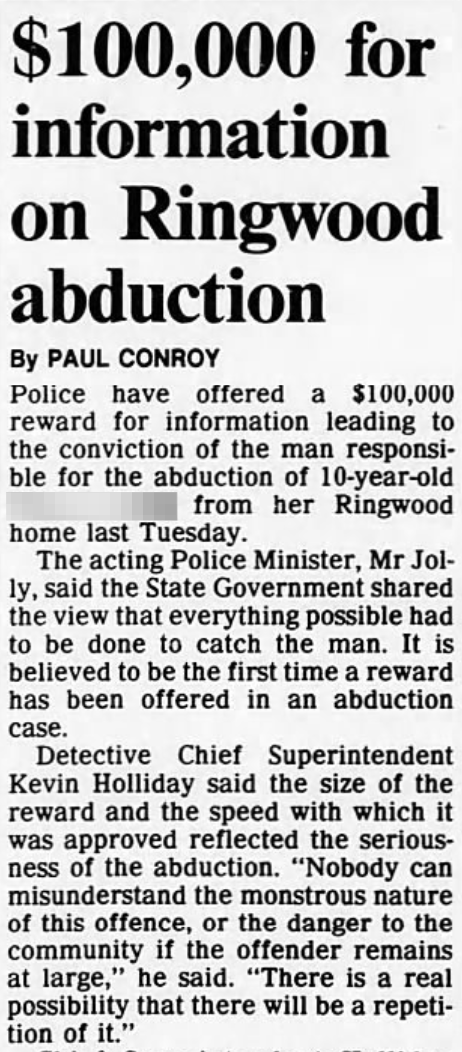
They were so worried that for the first time ever in an abduction case that didn’t involve a murder, a reward of $100,000 for information leading to the offender, was announced, saying that the size of the reward and the speed with which it was approved reflected the seriousness of the abduction.
“Nobody can misunderstand the monstrous nature of this offence, or the danger to the community if the offender remains at large… There is a real possibility that there will be a repetition of it.”
Yet despite the reward they were offering, they did not sound confident that it would lead anywhere. In fact, they even said it was going to be difficult to catch him.
None of these comments and actions were logical if the only other attack the Ringwood offender had been linked to was the one in Lower Plenty.
It makes no sense that the police would be concerned about not being able to catch an offender who had only struck twice. Surely this is a concern they’d only have if they were actually hunting a serial offender who had successfully evaded capture for a much long period of time.
All the language they used in reference to the Ringwood offender suggested they knew he was a serious serial offender, and had done or said things to some of those earlier victims that had them terrified about what he was going to do next.
Their decision in 1988 to change the narrative and disconnect those earlier precursor crimes from the later, well publicised ones, is the reason the public today still has no idea that Mr Cruel was a prolific serial kidnapper and rapist who targeted both children and adults.
