
If you want to understand the true profile of Mr Cruel, you have to look at how he officially introduced himself to the public.
According to the prevailing narrative, Mr Cruel’s reign of terror began at 4am on Saturday, August 22, 1987, in the suburb of Lower Plenty.
Lower Plenty is a quiet, bushy neighbourhood on the northern bank of Melbourne's Yarra River. Situated just 16 kilometres northeast of Melbourne’s central business district it sits firmly in Melbourne's "middle ring". It's not the inner city, but it's not the outer suburbs either.
But yet, it looks very different to its equivalently-distanced suburbs to the south of the Yarra River. Melbourne did not develop at an equal rate in all directions. Geographically, the north east suburbs are unique, with hills, valleys and ridges dissected by multiple major rivers and their tributaries. The topography of the entire area is impressive, with gullies so steep, they verge on escarpments.
Such challenging terrain makes large-scale development prohibitively expensive, and for the city’s first century of urban sprawl, this region remained largely untouched. And when the post-war population boom brought a relentless surge of developers, successful community resistance led to farms and orchards being subdivided into large acreage blocks.
Unfortunately, the low density housing built into the natural gullies, ridges and Aussie bush land provided the perfect natural isolation for a predator who wished to not be seen as they skulked about.
When you look at the mechanics of what the offender actually did inside that house he targeted on this night, the idea that this was his first major outing in criminality is complete nonsense.
Melbourne was in the depths of winter, and it was being battered by a fierce gale. The cold, wet, and miserable weather kept the city’s three million residents tucked into bed, preoccupied with little else other than the impending final round of Australian Rules Football or “the footy” being held that week.
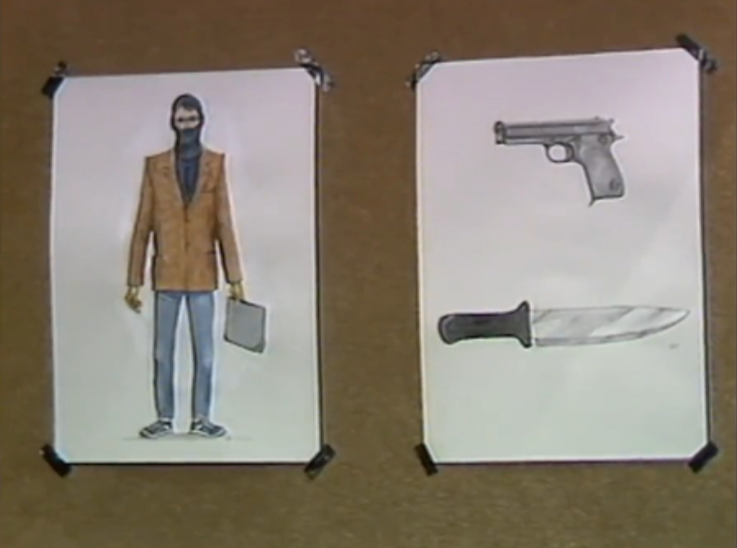
Like a scene from a bad nightmare, a couple in their thirties woke to a masked man standing over them. He was in their bedroom, menacing them with both a handgun and a knife. They had heard nothing to alert them to an intruder, and the sounds that night of howling and cracking of gum tree branches must have been the perfect background music to this intruder's ears.
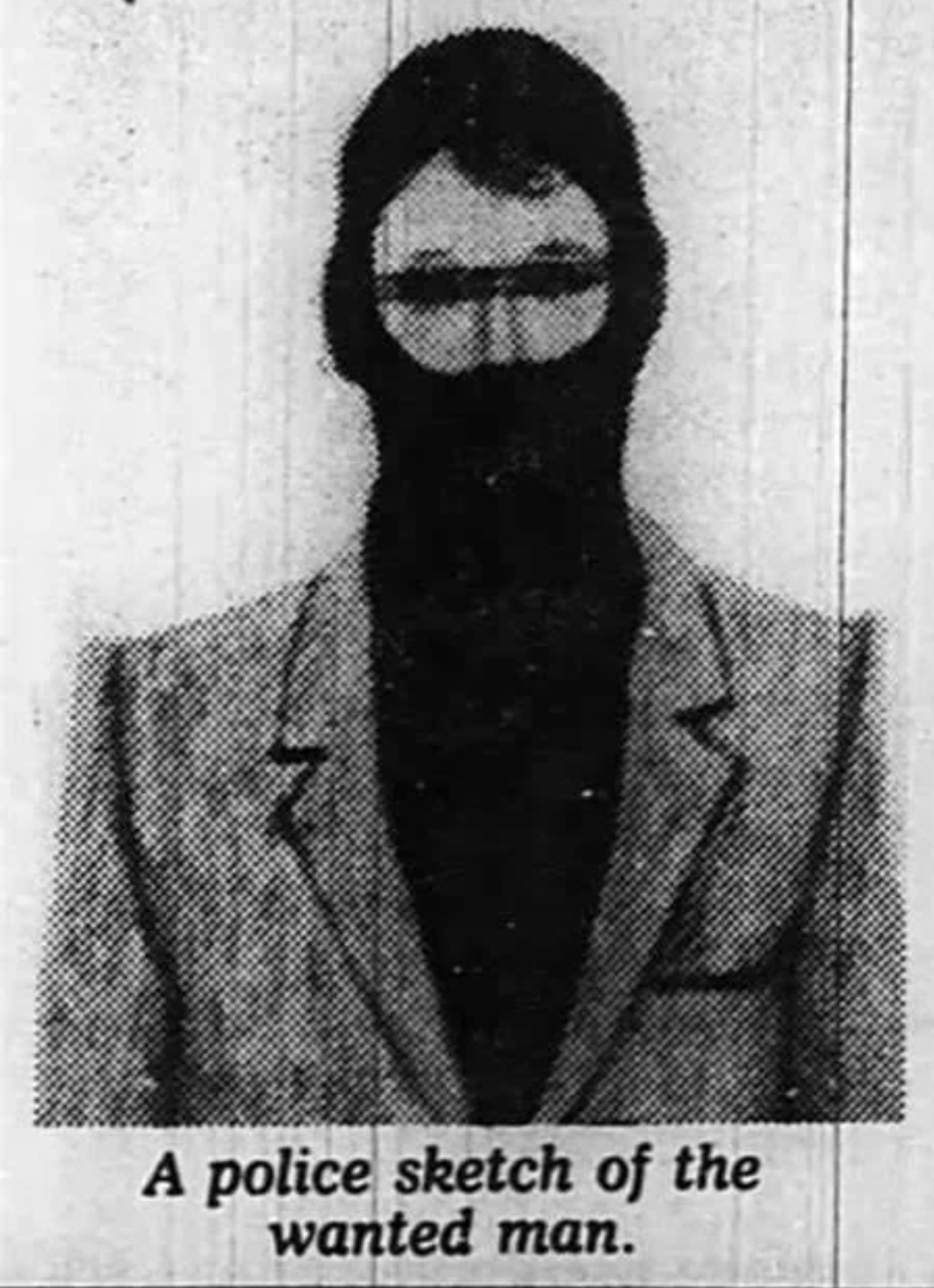
The man told the couple he was only interested in taking some personal belongings and having a shower. He asked where he could find specific items, including a razor blade so he could shave, a first aid kit and some clean clothes, giving the impression that he was just down on his luck, but otherwise relatively harmless. Whether they believed him or not was a different matter, but as the couple were unarmed and still lying in bed, they didn’t really feel they had any option except to comply with his instructions.
He forced them onto their stomachs and restrained their hands and feet using contemporary metal handcuffs. He then left the room, woke their six-year-old son and eleven-year-old daughter, and brought them both back into the master bedroom. The parents and their son were quickly blindfolded and gagged with surgical tape before being herded into a wardrobe and locked inside.
The offender then used the master bedroom’s landline phone to make a series of calls, clearly intending for the trapped victims to overhear the conversation. They heard him call the person on the other end a "bozo" and deliver a chilling warning to someone to "move your children or else they’ll be next."
It's uncertain whether this was a ruse designed to send investigators into a frenzy searching for a potentially fake lead. Information from the police has been conflicting, with some reports suggesting that there was no evidence of an outbound call being made. But at least initially, they believed it was a genuine threat, issuing a public warning for the recipient of this phone call to come forward. No one did.
Once the intruder had finished making or staging these phone calls, he turned on the radio, setting the dial AM frequency 3KZ, the most popular classic hits station of the era. It was the precursor to today’s GoldFM. He cranked the volume up high to mask the sounds of what was about to happen and then exited the bedroom with the eleven-year-old girl. He asked for her name and age, which she gave him, but he promptly ignored her response, instead insisting on calling her Kate, which was not the name she had just provided.
Calm and in control
The girl was subjected to a two hour assault. Between the assaults, the offender would rest or wander through the house, collecting items to steal. He browsed through the food in the refrigerator, poured himself a glass of milk and helped himself to the family’s leftover dinner. Police highlighted this as a sign of his brazenness and coolness, which is true, but it wasn't actually an entirely unique signature as implied. A significant minority of burglars are known to do the same, albeit in vacant homes.
His other actions, however, were highly unusual. He returned to the master bedroom several times, allegedly to check on the welfare of the parents and son. I seriously doubt this was his intent, and I ssuspect the checks were merely a pre-emptive measure to ensure they weren't close to escaping from their restraints.
During one of these feigned "welfare checks," he removed the metal handcuffs and re-bound their hands and feet with nylon cord. Police were convinced that this nylon cord was not available in Australia (it was), and therefore didn't believe how anybody could access it (umm...in shops or by mail?) without having international ties. Consumed by this warped logic, they sent themselves down a dead-end rabbit hole of international undertones, instead of concentrating on the important matters.
He had a high level of forensic awareness
Back in the house, before he left, the offender made his victim shower, brush her teeth and clean under her fingernails, presumably with the intent of removing any traces of his saliva or skin which could be used to genetically match him to the scene of the crime.
In 1987, DNA analysis had not yet been used in a criminal trial anywhere in the world, and the technology was still 2 years away from being used in Australia. Yet, this offender had knowledge of the emerging science and was implementing techniques to get around it. The police were very worried about how the offender knew this information, catastrophising over where this knowledge came from. The public joined them for the subsequent 40 years, with the theory that Mr Cruel was a police officer being a well documented favourite.
But science journalists had been reporting on this topic for some time. Perhaps the police didn’t read or even notice the science articles in the newspaper. Or maybe they failed to appreciate that law abiding professionals were not the only ones that aspired to be subject matter experts. In fact, I’d argue that in order to become an expert criminal like Mr Cruel, you would need to participate in “professional” development opportunities. And this would include reading research articles to stay abreast of new techniques and technology in your chosen field.
Obsessive-compulsive traits
Understanding Mr Cruel’s counter-forensic actions, however, were complicated by what appeared to be independent, albeit helpful, obsessive, compulsive traits. The police largely hid this detail, though, from public view, which is strange since it's a visible trait that would have made him much more identifiable by family and friends. Only very recently did we learn via leaked information to a journalist that the victim was made to shower not only after their assault, but before.
But there were always clues to Mr Cruel's obsessive-compulsions.
For instance, he washed the dishes after he ate his meal. Whilst his intent here might have been to remove saliva from the crime scene, he also took the time to return the milk carton back into the fridge, as if he just couldn’t stand seeing it sit there on the kitchen counter where it didn’t belong.
At some point he also swept up the glass shards from the floor under the window he had broken to gain access to the house. He always wore gloves so fingerprints wouldn’t have been his concern. But perhaps he really had cut himself when he entered, which would have then prompted the request for a first aid kit, and worry over traces of blood. But maybe he just couldn't stand looking at the mess.
The attack concludes
Once the offender was finally done assaulting and eating and cleaning, he dumped his victim in a lounge chair. He told her he was leaving and instructed her to count to one hundred before removing her blindfold and going to untie her parents, who were still trapped in the bedroom.
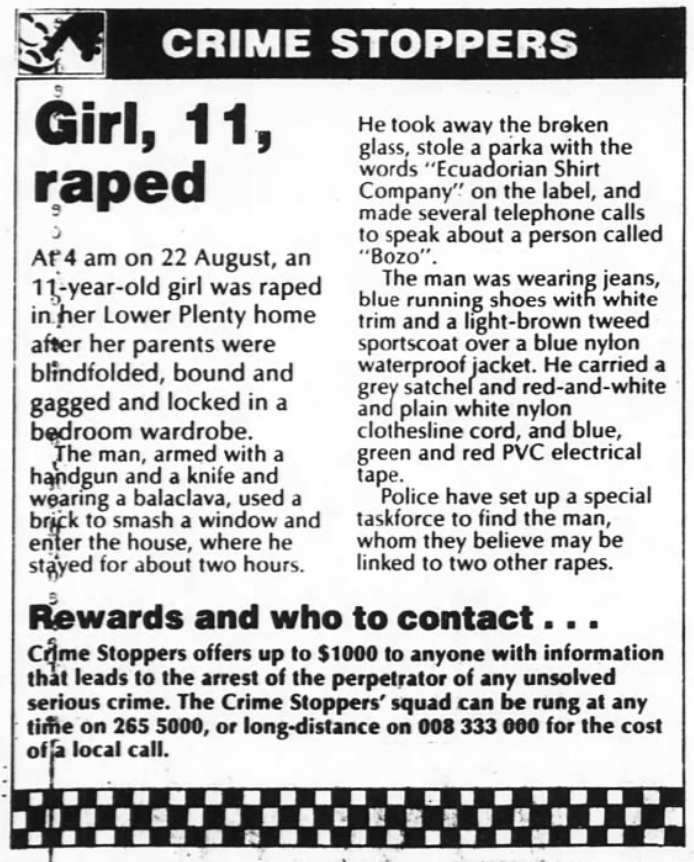
And with that, he left. His stolen haul included $250 cash, a valuable and distinctive diamond ring, a vinyl record set called “Classic Gold” by the London Philharmonic Orchestra that the police wrongly claimed was rare, and a men's blue winter coat that police had trouble describing, but sounded like what Americans would call a snorkel jacket or parka. It was a boutique South American brand and was likely the only one of its kind in Australia. With the exception of the coat, which he probably put on as he left, the rest of the items would have fit into the small grey fabric bag he had brought with him.
Like the jacket, police also struggled to describe this bag, stating only that it looked somewhat like a child’s school library bag, which were typically made of cotton with a drawstring closure. But the uncertainty suggests that it had features that didn’t perfectly align with what the victims were familiar with. I don’t think it’s a coincidence that the most similar sort of bag of that vintage that resembled a school library bag, was a bank cash bag.
It’s unclear why police failed to recognise this, or alternatively chose not to draw attention to this fact. However, it meant the public was never encouraged to consider that the offender might have worked in an industry like banking or cash-in-transit, or was involved in the armed robbery community that intercepted the money being handled by those same industries.
Back in the house, by the time the girl had managed to untie her parents, the offender was long gone. He had also cut their phone line, delaying their ability to call the police.
Neighbours later reported the presence of a prowler in the area in the weeks leading up to the attack. This unknown person was associated with a dark blue sedan.
The aftermath
Despite the heinous nature of the crime, the case didn’t receive much public attention. The child hadn’t been killed, nor were they missing, so the media were not privy to any personal information about the victims. With no house to stand in front of, no photos to publish, and no quotes from family members, it simply wasn't a compelling story to tell.
However, the attack in Lower Plenty was not an isolated event. Concerned that the offender would strike again, police held a press conference the following week, seeking the public’s assistance.
The precursor crimes
There they revealed that the Lower Plenty attack was the latest in a series of similar unsolved burglaries and rapes that had occurred locally over the past two years. Only some of these had been previously reported, and virtually none had received any substantial public attention. Forty years later, we still know very little about most of these precursor attacks.
Police referenced several attacks in this local cluster which began two years earlier in December 1985.
They described three similar attacks that took place over the course of four days.
The first was in the north eastern suburb of Warrandyte on December 4, 1985. A 30-year-old woman was confronted by an armed offender wearing a balaclava, gloves, and fawn overalls who suddenly appeared in her room out of a walk-in closet. Police sought information about a white car, possibly a Mercedes, associated with the attack.
The second took place in the nearby suburb of Donvale, just two days later on December 6, 1985.
The armed offender broke in while the occupants were out. When a 30-year-old resident and her 17-year-old sister returned, he confronted them. He tied up the 17-year-old using pantyhose and locked her in a closet. He then restrained the adult with the exact same type of nylon cord later used in the Lower Plenty attack, and sexually assaulted her over a 90 minute period. During this time, he occasionally checked on the welfare of the sister in the closet, and he ripped the landline phone from the wall before leaving. Police called this a "virtual blueprint" of the Lower Plenty attack, stating that they were certain it was the same man.
The third attack in this series occurred the following night on Saturday December 7, 1985 in yet another nearby suburb called Bulleen. This time a 34-year-woman was confronted by an armed intruder around 11.30pm, before being sexually assaulted. Her 6-year-old daughter was home at the time.
There were two other but more recent attacks the police also referenced at this press conference, one from March 1987, and a second one that had occurred only two weeks before the Lower Plenty attack. Both had taken place in yet another nearby suburb called Greensborough. On both of these occasions, the offender struck when the victims were already asleep. He also wore stocking masks instead of a balaclava, but his description otherwise matched the man from the 1985 series of attacks. Police believed he had prior knowledge of the homes and had been watching the occupants in the lead-up.
Curiously, police publicly reported the specific names of the Greensborough streets where these assaults occurred. This was highly unusual, especially since one street contained less than a dozen free standing houses, increasing the risk of the victim being identified.
But by revealing their near-exact locations, the police allowed an important pattern to be identified, showing that the offender was highly selective in the areas he targeted.
Greensborough is primarily a built-up urban suburb. It’s street after street of 600m2 properties with similar looking homes. Yet the offender had managed to select the two streets with the greatest anomaly to carry out his attacks.
The two streets essentially formed a little island of their own, surrounded on multiple sides by either river or train tracks. Positioned directly off a main road, there was just one road in and out. The streets were enveloped by natural bush land, and winding paths and trails zigzagged between the houses.
The offender had numerous choices for escape routes. The weaving paths led to a footbridge over the river, and the railway line could easily have been crossed on foot. Anyone attempting to follow the man by car, would have been forced onto a five minute drive around via the single vehicle bridge. And without a doubt, the offender would have been long gone by then.
I refer to this landscape as “leaky”.
This "leaky" geography is a feature of all the attack suburbs. All have a major river running through them, either the Yarra or the Plenty River, and these rivers all have adjoining bush land with zigzagging trails and tracks.
Notably, four of the five suburbs have 220kV high-voltage power transmission lines running through them. This strike rate is very unusual. The advantage they present to a sneaky offender are the vegetation-free corridors that are created around them, allowing access to areas that wouldn’t normally have it, and quick opportunities for escape. They also visually dominate the landscape.
Those of you familiar with Melbourne will recognise the tight clustering of these five suburbs. With over 300 suburbs in metropolitan Melbourne, this zone represents, at best, only 5% of the city’s footprint.
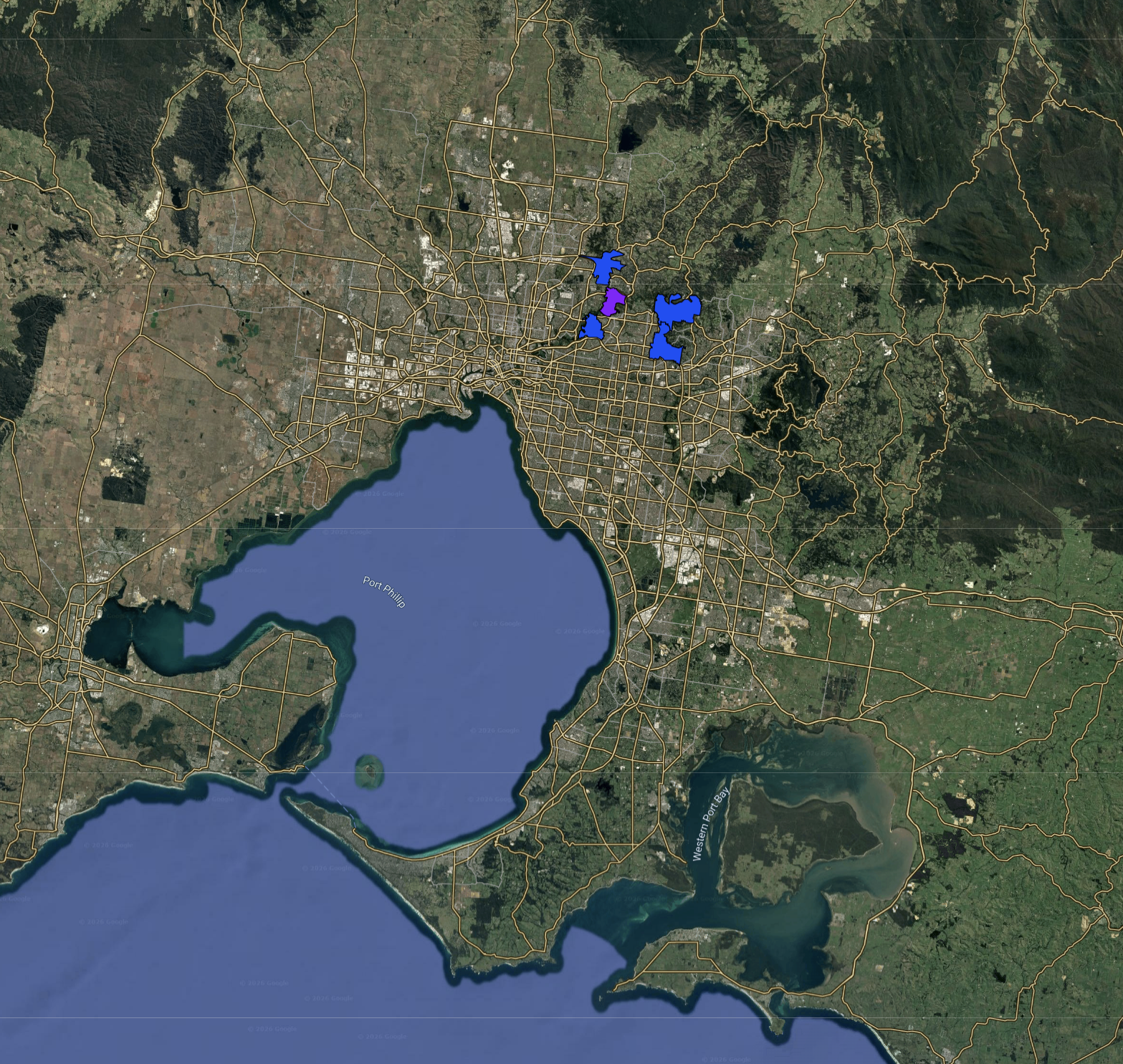
The selection of these neighbourhoods was not a coincidence. The offender was clearly picky with his targets, utilising trails, bridges and underpasses to skulk around undisturbed and undetected. He would have rarely crossed paths with the locals in his travels. Nowadays the councils tend to actively beautify and develop these pockets of public space, encouraging their use for recreation. But back then, they were isolated and dingy, and most law-abiding people avoided them because they were worried they’d bump into people like him.
Not surprisingly, the next family he tormented also lived in a neighbourhood with many shared features.
