
In the late 1980s and early 1990s, the city of Melbourne was tormented by a predator unlike any in the nation's history. Dubbed "Mr Cruel" by the media, he operated with near-total anonymity. He did not snatch children from public parks or lure them from suburban backyards. Instead, he executed high-risk home invasions in the dead of night. He systematically neutralised families within their homes, cutting telephone lines and binding parents and siblings, before removing his chosen victim through their own front door. In doing so, he dismantled the fundamental assumption that children were secure within locked environments under parental supervision.
The Established Offence Timeline
Four distinct attacks are widely recognised as the core of this offender's portfolio:
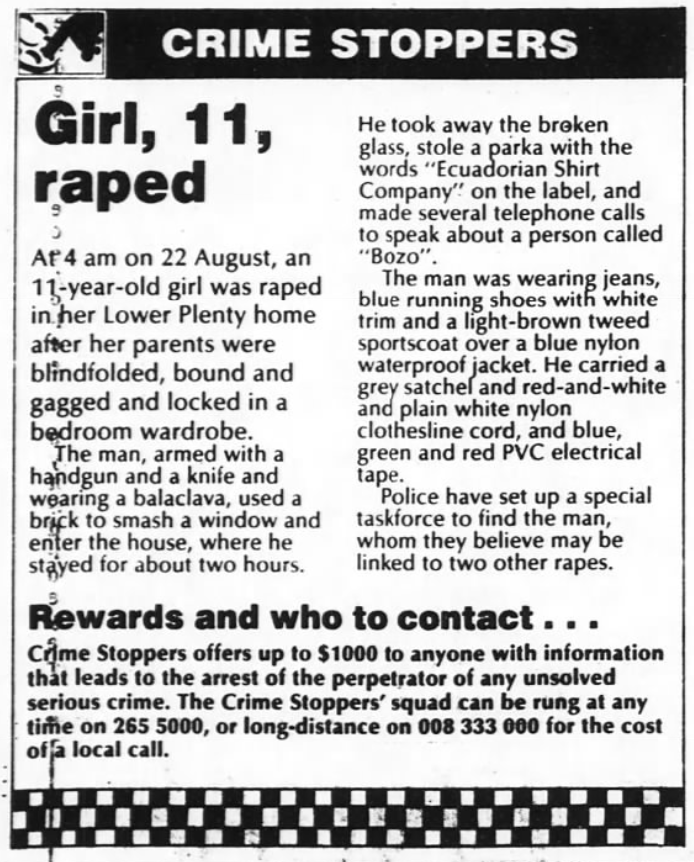
Lower Plenty (1987): The offender breached a residential home at 4am, armed with a knife, a handgun, and handcuffs. After binding and gagging a couple and their seven-year-old son in a wardrobe, he assaulted their eleven-year-old daughter inside the home for two hours.
Ringwood (1988): A structurally identical home invasion. However, after restraining the parents, the offender abducted their ten-year-old daughter, holding her captive for eighteen hours at a secure, secondary detention site.
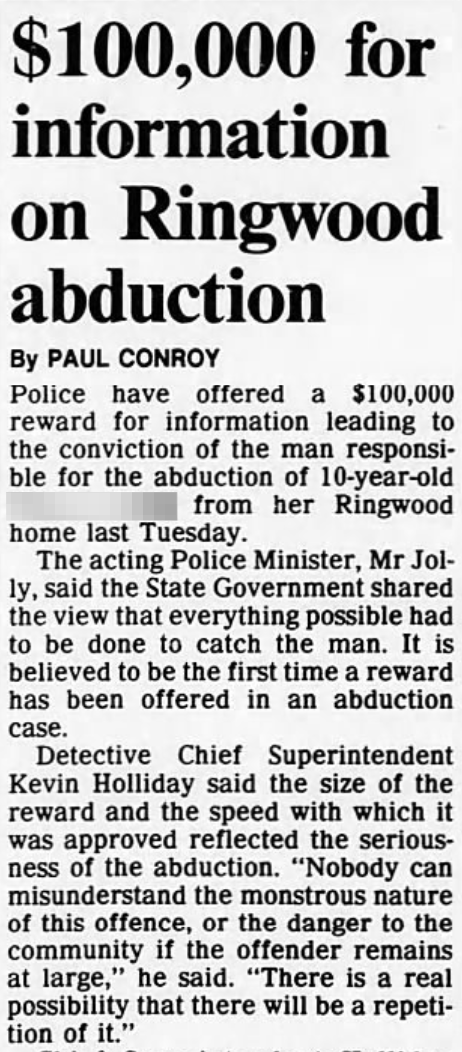
Police announce the largest ever reward offered for information after the abduction of the 10-year-old girl. Published in The Age, 2 January 1989.
Canterbury (1990): The offender targeted a residence where thirteen- and fifteen-year-old sisters were home alone. He restrained the elder sister and announced he was abducting the younger sibling for a $25,000 ransom. He released the victim fifty hours later, having made no attempt to collect the funds.
Templestowe (1991): The abduction of thirteen-year-old Karmein Chan. Unlike the previous victims, Karmein was never released. Twelve months later, her skeletal remains were discovered in a shallow grave at Thomastown. She had been executed with three gunshots to the head.
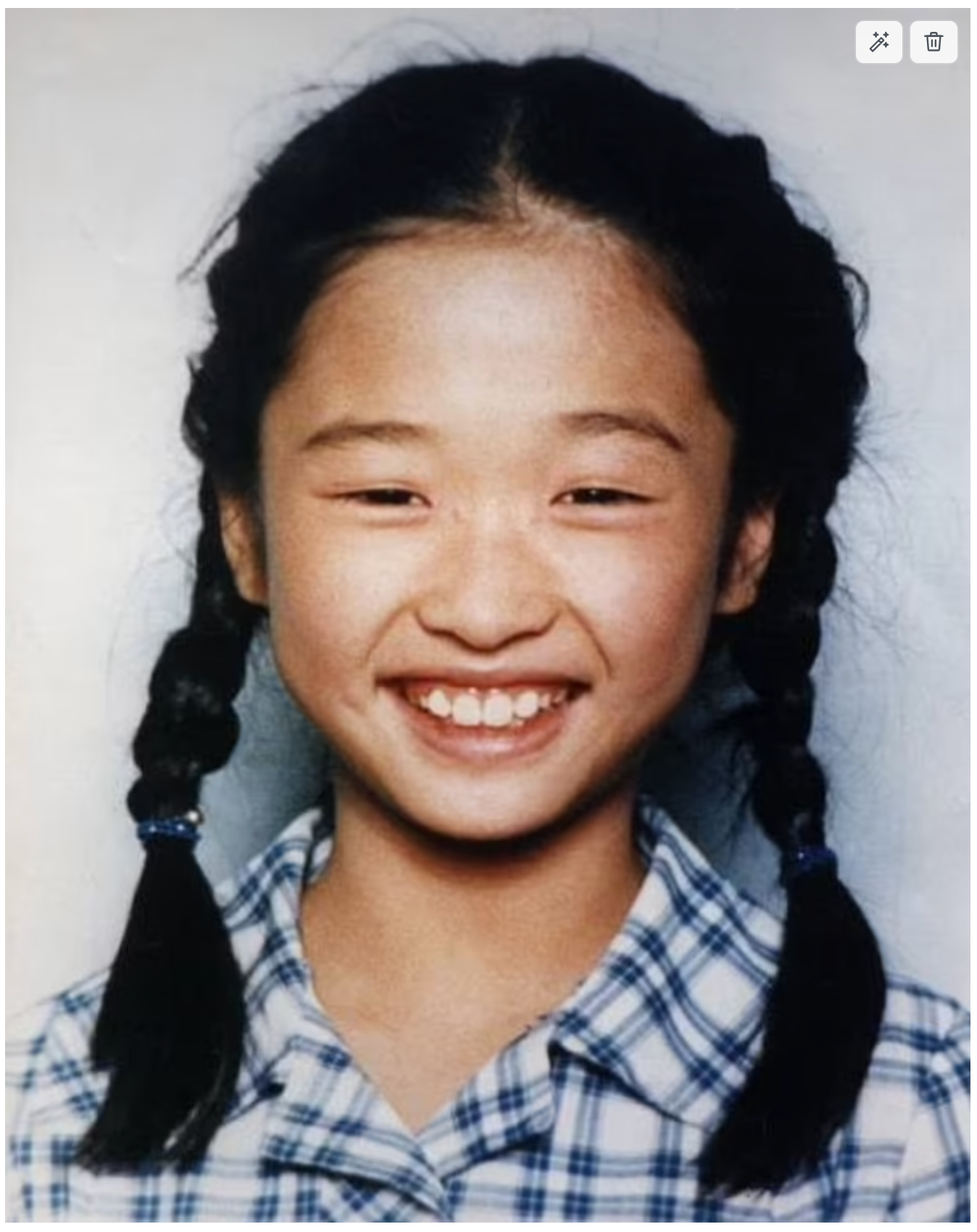
The detention site used in both kidnappings was identical. The fact that it could not be located added to the city's collective panic.
While public anxiety was initially mitigated by the fact that the offender routinely returned his victims alive, the execution of Karmein Chan shattered that comfort. All over town, dinner parties were cancelled, and parents felt like only their presence could protect their daughters, even though parents had been present during the first two attacks. Yet a critical historical question remained unaddressed, and rarely discussed: where did a predator of this calibre originate?
The Precursor Timeline and Operational Experience
To those familiar only with the mainstream narrative, it may come as a surprise that Mr Cruel’s methodology did not begin with home invasions. Police have actually associated him with a series of precursor offences between 1985 and 1987. These earlier crimes involved adult victims and abductions executed directly from public streets and major thoroughfares. Remarkably, despite the highly public nature of many of these locations, there were never any witnesses to his crimes.
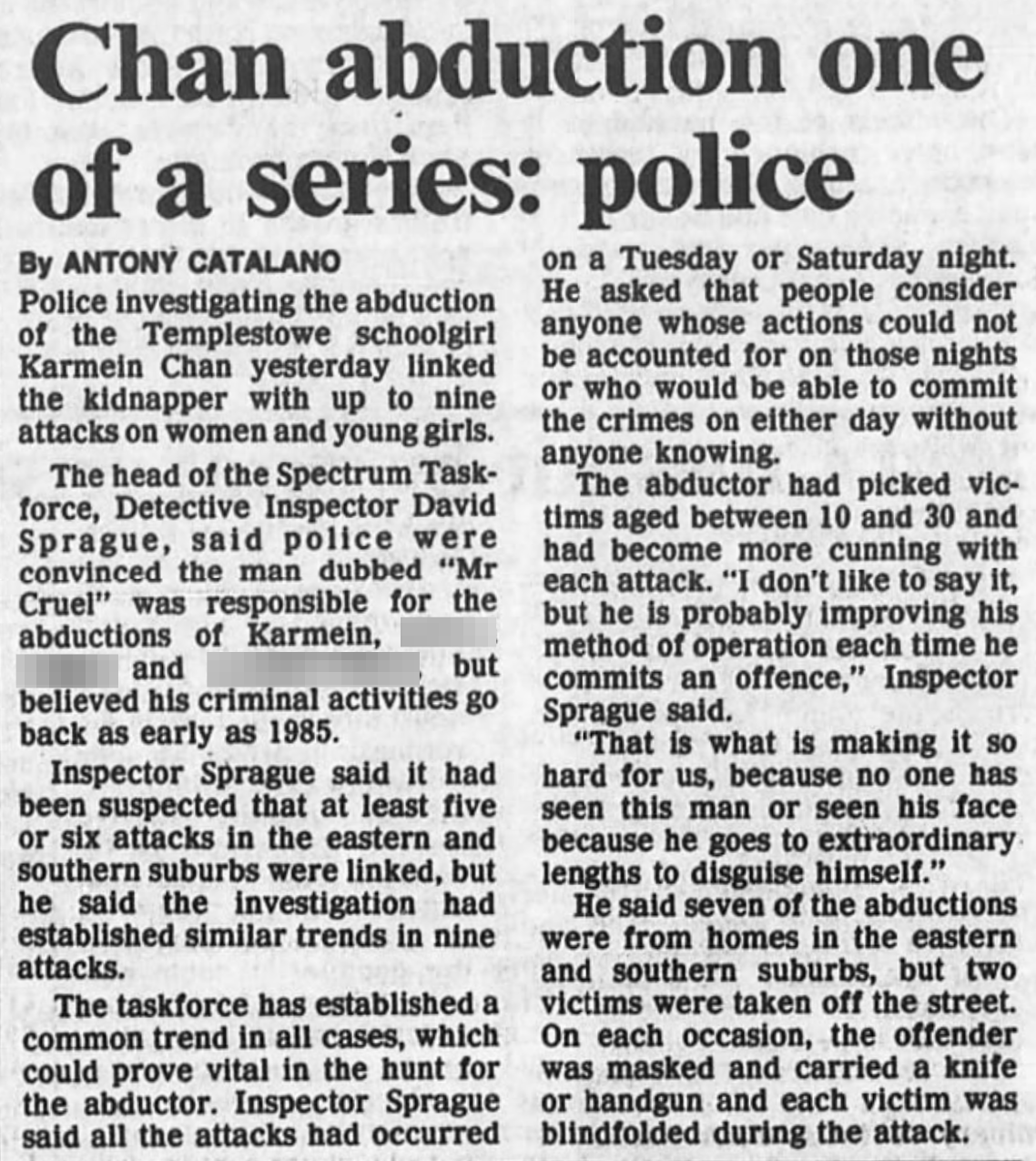
Mr Cruel accumulated a large volume of victims who, despite surviving the encounters, were unable to identify him, a testament to his scene control and discipline in waiting for the right moment. These precursor offences shift the established timeline, proving he emerged on Melbourne's criminal landscape at least three years earlier than is widely believed.
Yet, even when factoring in this adjusted chronology, the offender's operational profile remains highly anomalous. A predator does not debut on public streets with Olympic-level abduction and evasion skills. Nor do you acquire competency of this magnitude through passive consumption of media or literature. He must have had practical, real-world experience.
The Spectrum of Abduction
Stranger kidnapping is an exceedingly rare phenomenon in Australia. When it occurs, the tactical choices made by an offender, such as their hunting grounds, target selection, and methods of subjugation, reveal the precise limits of their capability and intelligence.
The vast majority of stranger abductions rely on crude opportunism rather than tactical precision. Typical offenders exploit inherent vulnerabilities in semi-public spaces, targeting hitchhikers, sex workers, or isolated, intoxicated pedestrians late at night. These attacks require minimal operational skill because the victim’s circumstances provide the offender with an inherent advantage. However, because these attacks often begin in public areas without meticulous foresight, the offenders are frequently apprehended.
Occasionally, an offender who lacks sophistication in the initial abduction phase compensates with competence in the aftermath. Ivan Milat remains the quintessential example of this imbalance.
Ivan Milat: Crude Tactics, But Environmental Mastery
Milat’s method of acquiring victims was elementary. He targeted young backpackers hitchhiking along major highways or offered lifts to vulnerable travellers. He managed the risk of witnesses by relying on the environment, selecting either isolated stretches of road or busy hubs, like crowded pubs, where an individual’s departure would go unnoticed.
He possessed no complex infiltration skills or dynamic control mechanisms; indeed, his operational control was so flawed that a surviving victim, Paul Onions, successfully escaped his vehicle and provided the foundational evidence for his ultimate conviction.
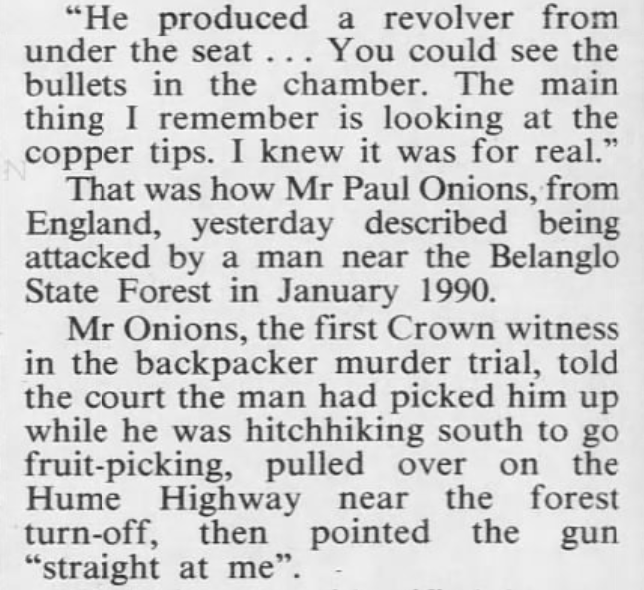
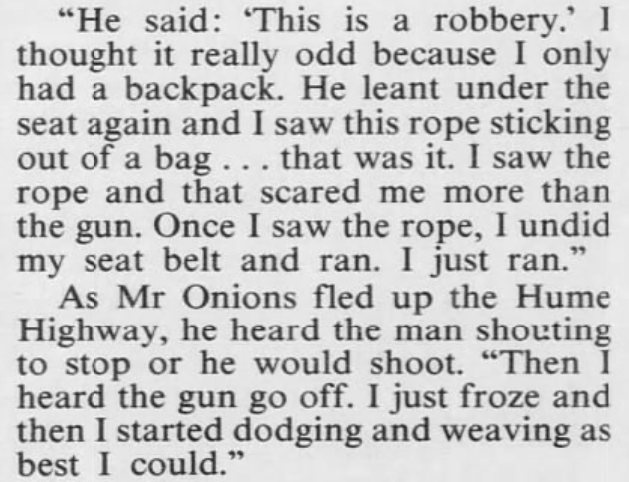
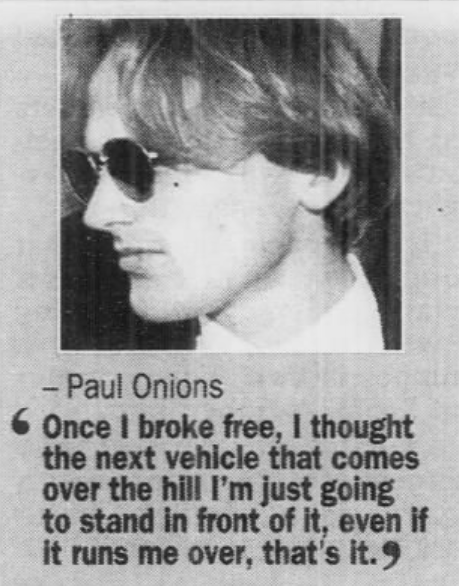
Victim Paul Onions was the key witness in the trial that saw Ivan Milat convicted of 7 murders committed between December 1989 and April 1992. Milat was sentenced to life in jail, which is where he remained until he died in 2019. Published in The Age July 19 1996.
Milat’s competence was strictly limited to geography and disposal. His intimate familiarity with the rugged terrain of the Belanglo State Forest allowed him to conceal remains so effectively that they evaded discovery for years. And it's highly probable that several of his victims remain undiscovered. You’ll find their names on a New South Wales list of long-term missing persons.
Mr Cruel: The Sophisticated Outlier
Mr Cruel occupied the absolute opposite end of this tactical spectrum. No other offender in Australian history matches his operational profile, and he remains a distinct anomaly even within global criminology circles.
The most remarkable element of his strategy was his willingness to front-load immense operational risk. The initial phases of his home invasions were extraordinarily high-consequence.
While other offenders targeted the vulnerable, Mr Cruel subdued multiple fit, healthy adults within their own homes. While others sought environments that concealed the crime, he operated in residential areas in multi-person homes where witnesses were a certainty given he 'introduced' himself to them. And while others targeted the easily isolated, he chose secure buildings where he forcefully had to remove the victims.
A single failure in voice control, physical restraint, or situational awareness could have invited immediate neighbour intervention. Yet, he operated with a level of confidence that demonstrated a capacity to manage variables that would cause a standard offender to panic.
For Mr Cruel, managing this extreme upfront exposure was a calculated trade-off. If he successfully controlled the high-risk infiltration phase, he was rewarded with a guaranteed low-risk, highly secure follow-through at his private detention premises.
The Tynong North murders: An Exceptional Parallel
While stranger kidnappings are rare, sophisticated ones are exceedingly so. Yet Melbourne was home to two distinct offenders operating with this level of capability. Statistically, this is highly improbable.
Prior to Mr Cruel's emergence, the Tynong North and Frankston serial killer was responsible for six murders between May 1980 and October 1981. This file represents Victoria’s largest unsolved serial homicide investigation, yet it spent decades gathering dust under a narrative that implicated the wrong man.
Like Mr Cruel, this killer was a sophisticated outlier. He did not target vulnerable hitchhikers who voluntarily entered a vehicle, nor did he hunt in isolated terrain. His modus operandi involved abducting teenage girls and adult women from major public roads and public transport hubs in broad daylight.
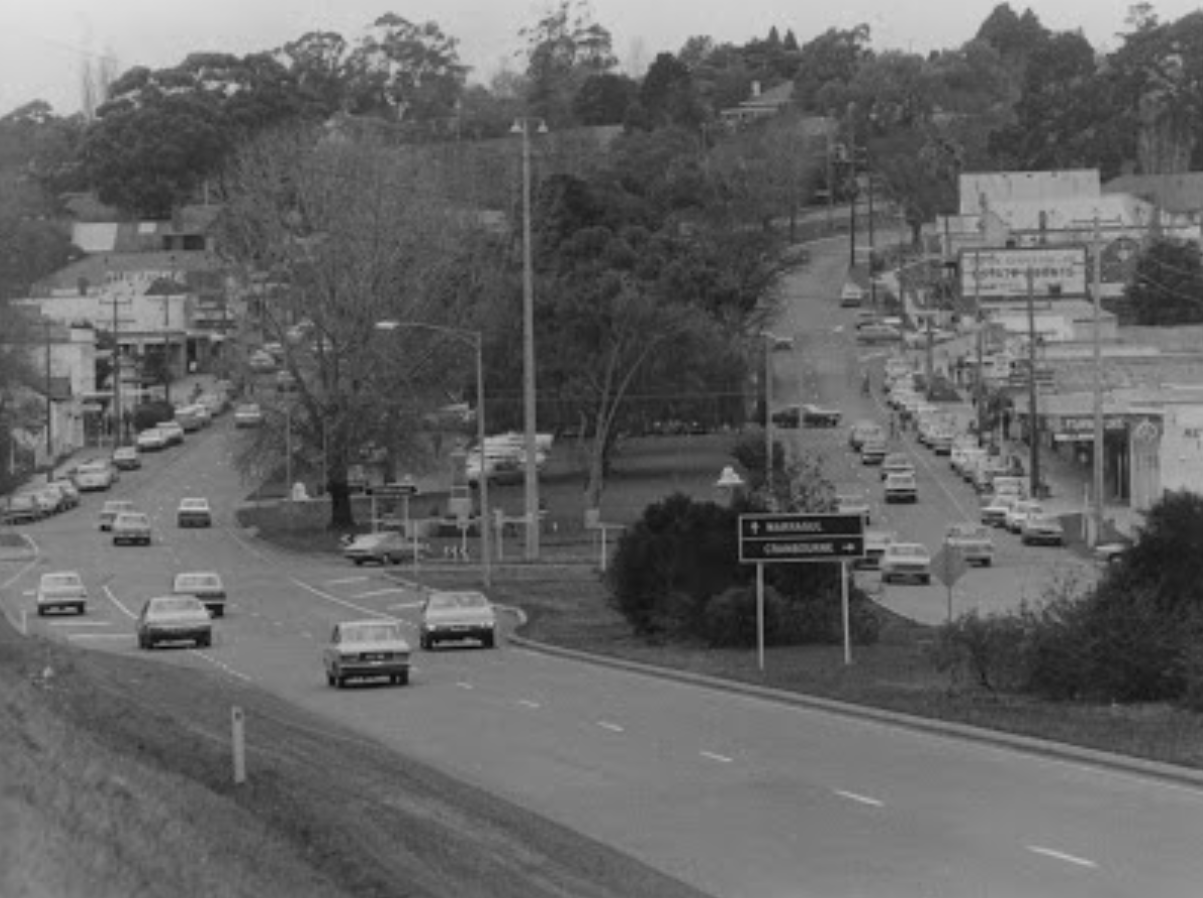
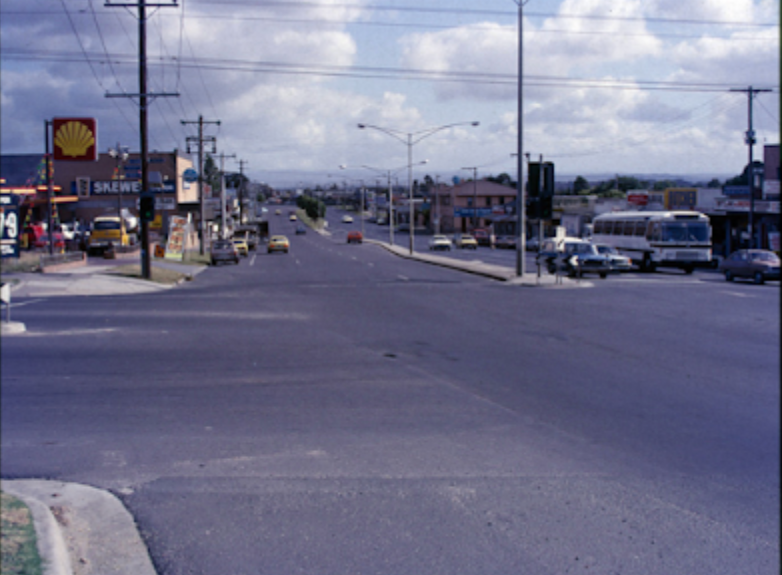
Era photographs from Berwick and Cranbourne, courtesy of https://caseycardinialinkstoourpast.blogspot.com/. In each case, the victims disappeared during daylight hours from bus stops just up the road from where these photos were taken. There were no witnesses.
To make individuals vanish instantly from highly dynamic, uncontrolled public spaces without leaving a single eye-witness or a shred of forensic evidence requires precise timing, intense surveillance, and immediate coercive control.
Yet, investigators quickly dismissed these as simple "crimes of opportunity" - a narrative driven by their immediate, blinding fixation on a local suspect named Harold Janman.
Janman was an easy target. He lived close by the two Frankston victims, and liked to offer older women in his neighbourhood unsolicited van rides. He was frequently described as odd, and had recently been bailed up in a police sting targeting the illegal solicitation of sex workers. For some reason, this minor criminal history was enough to convince most people that he was therefore also a serial killer.
Janman wasn't capable of pulling off anything that required planning. He didn't have enough intellectual or tactical wherewithal to even remember what he was doing between breakfast and lunch on any given day.
But because investigators assumed Janman was guilty, they actively distorted the parameters of the crime to fit his limited capabilities. Since Janman wasn't capable of planning, the murders were described as 'crimes of opportunity', when the evidence suggested otherwise. And when his profile patently failed to match the logistics of all six offences, the police convoluted the theory further, suggesting up to three separate, unrelated killers were coincidentally operating in the exact same manner.
While this bureaucratic exercise insulated investigators from admitting their suspect was a mismatch, it left the real offender completely free to continue his campaign. Even after the discovery of three of the victims in a mass burial site at Tynong North in December 1980, the true perpetrator remained entirely unfazed, executing another flawless abduction the following year under the nose of intense police scrutiny - and around the corner from Janman's house.
The coronial inquest in 1983 formally concluded there was no actual evidence linking Janman to the deaths, but the police maintained their dogged adherence to Janman's guilt. When he died in August 2020, he had endured two decades of police and media harassment. To the public, he was still the almost certain suspect. Because the public believed the case was as good as solved, and simply suffered from a lack of evidence to lay formal charges, the investigation has been dreadfully ignored.
A dangerous tactic if you're wrong.
Systemic Oversight and the Identical Profiles
The prevailing true-crime consensus maintains that Mr Cruel was strictly a non-lethal sex offender whose operational model only turned deadly when he killed Karmein Chan in a panic. This perspective suffers from severe investigative myopia, entirely ignoring what he was doing before 1985.
In October 2017, Victoria Police held a landmark press conference, officially stating for the first time that they believed all six murders of the Tynong North and Frankston crime series were the work of a single individual. The public and media naturally assumed this was a retrospective nod to Harold Janman. It was not.
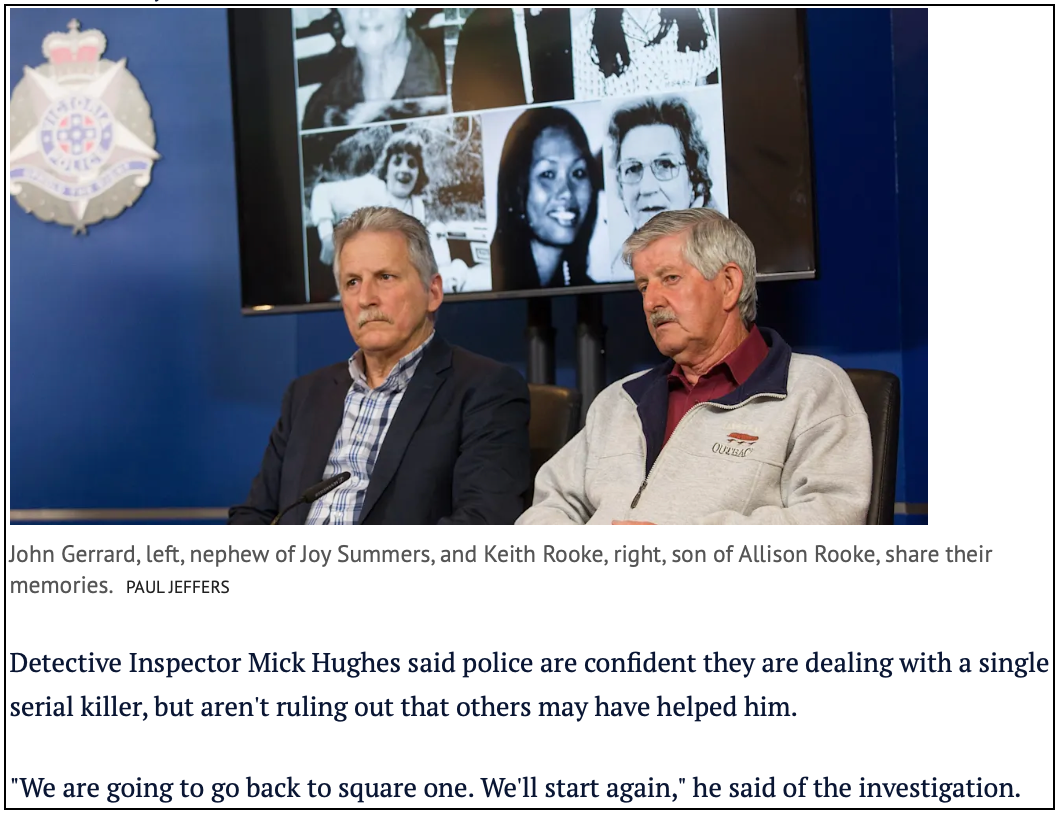
During that briefing, investigators revealed they were focusing on a person of interest known as "James" from Glen Iris, who had actively befriended victim Bertha Miller at her tram stop two weeks before her disappearance. Victoria Police Homicide Squad Detective Inspector Mick Hughes said: "We've never identified who that is, and we're working on the principle there's a good chance he is our offender."
This recent disclosure by Victoria Police marked a fundamental shift. Although they didn't explicitly articulate it, they have quietly discarded their decades-old "opportunistic" Tynong North narrative. They acknowledged that these 1980 and 1981 victims were highly likely pre-selected and stalked by a single, sophisticated offender operating via calculated deception and almost certainly aliases. In doing so, the police effectively replaced their old profile with a carbon copy of Mr Cruel.
The Government Never Admits it is Wrong
Harold Janman is clearly no longer the suspect for the Tynong North murders. But because the police never explicitly stated it, to the public and media, Janman is still their man.
If the Victorian government has their own modus operandi, this is it. They never explicitly admit to making a mistake. They just use tricky language and make tiny updates at glacial speeds, hoping people won't realise that the core message has drastically changed over time. They count on the fact that the public will not identify the importance of the words they omit from a conversation, or the careful choice of words they include.
Is it really more plausible that Victoria was home to two separate, highly sophisticated kidnappers operating with unprecedented success in the same region on a perfectly chronological timeline, than the idea that there was just one individual responsible for both series of crimes?
Isn't the idea that there were two evil monsters that the police failed to catch, worse?
The tactical overlap between these two mystery offenders and the eras they operated in is really just the foundation of this investigation. Over the following chapters, I will present more criminological evidence that ties Mr Cruel and the Tynong North serial killer together. There is shared victimology, a common and rare Shakespearean calling card left at both crime scenes, and a unique, geographical signature that features in each of their victim disposal sites.
