
In the late 1980s and early 1990s, the city of Melbourne was tormented by a predator unlike anything seen before. The media nicknamed him “Mr Cruel,” and he was a ghost. He didn’t snatch kids from public places, and he didn't lure them from yards. Instead, he broke into family homes in the dead of night. He tied up parents and siblings, cut phone lines, and then carried his chosen victims right out their own front doors. He shattered the belief that children were safe in their own locked-up homes, even under the supervision of their parents.
Mr Cruel's four attacks
There were four attacks widely established as being linked to this offender. The first was in Lower Plenty in 1987, where he broke into a house at 4am armed with a knife, a handgun, and handcuffs. He bound and gagged a couple and their 7-year-old son, locked them in a closet, and then assaulted an 11-year-old girl for two hours.
Then came a similar home invasion in Ringwood in 1988. But this time, after the parents had been restrained, the offender kidnapped their 10-year-old daughter and held her prisoner for 18 hours in a secret detention site.
The third attack happened in 1990 in Canterbury, where 13- and 15-year-old sisters were home alone. The offender tied up the older sister and told her he was taking her younger sister for a $25,000 ransom. He released the girl 50 hours later having never followed through on the money.
The detention location used in both kidnappings was the same, and it has never been found
This offender also possessed some unique traits, like his ability to stay a step ahead of the new field of DNA forensics. He made his victims wash themselves repeatedly, and he left behind no DNA evidence of his assaults. Melburnians were genuinely terrified. All over town, dinner parties were cancelled, and parents felt like only their presence could protect their daughters, even though parents had been present during the first two attacks.
Many people found some relief in the fact that the offender at least wasn't killing his victims. But that all changed in April 1991 when he abducted 13-year-old Karmein Chan from her home in Templestowe. Karmein was never released. One year later, her remains were found buried in a shallow grave in Thomastown. She had been shot three times in the head in a cold-blooded execution.
Why has this not been solved?
Right off the bat, Victoria Police sought help from the FBI to develop a profile, and that seems to have sent everyone looking in the wrong place. The FBI profile was not of a violent psychopath, but of a "non-violent, gentle, run-of-the-mill" paedophile who probably loved children and didn’t think he was hurting them.
Karmein’s murder was framed as something done out of "necessity," and the public was asked to look for a man who seemed distressed or anxious around the time of each attack. And so people did, despite struggling to understand how a "gentle" rapist could execute a child.
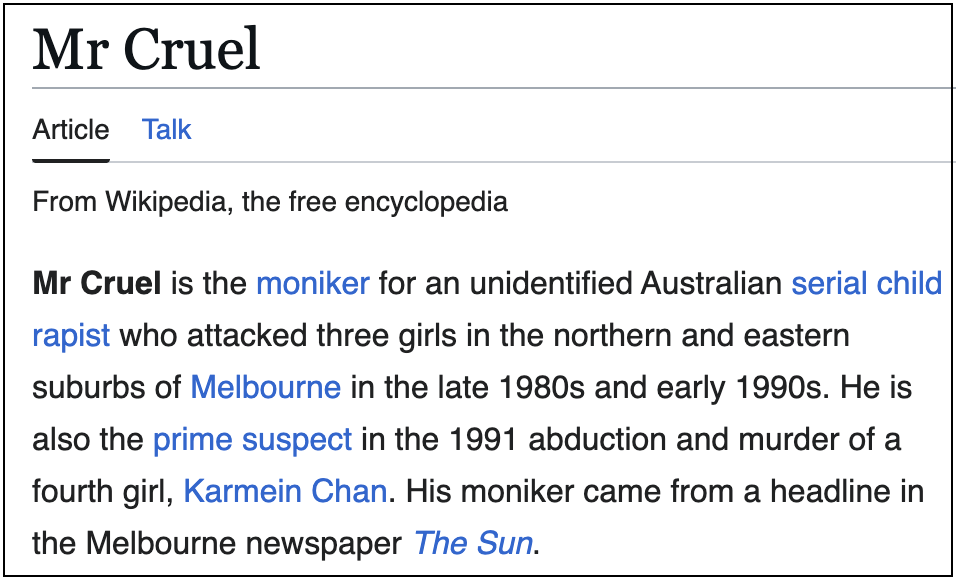
This flawed profile became so ingrained in the mythology that it still influences the narrative today. Even Wikipedia is still classifying this offender as a child rapist.
The early clues about Mr Cruel
In December 1992, it was reported (barely) that detectives were seeking to interview an American offender named Danny Starrett. Victoria Police believed Starrett was the most similar offender they had ever seen to the one who killed Karmein Chan.
Starrett was a married man with a child and a stable job at the Savannah River Plant which produced plutonium and tritium for nuclear weapons. He would plan his attacks around his wife's trips interstate so he could have the house to himself.
His victims were attacked far from his home. He would rent a car and drive up to hundreds of miles away, where he would hunt through trading magazines and newspapers to find people selling furniture or appliances. He would call them, identify homes where teenage girls appeared to be alone, and arrange a time to inspect the item for sale. He would then force his way in and, in earlier crimes, would sexually assault his victims inside their own home.
He then evolved into producing a gun and forcing the victims into his rental car, where they were blindfolded and driven back to his empty house. There, he had converted a closet into a small prison cell, boarded up windows, and put deadbolts on interior doors. The victims would be kept handcuffed for days, before being released in the general vicinity of their own homes, unable to identify their attacker or his house.
There was an escalation with his second-last victim, a 16-year-old, who he held prisoner for a number of weeks. He fantasised about them being a couple, forcing her to play board games and watch movies. Initially, he had her locked in a closet when he went out, but in time, desperate for a tiny bit of "freedom", she convinced him she wouldn't run away if he stopped restraining her.
But at some point, he either got sick of her, or his fantasy came crashing down, perhaps in a moment of clarity about the lack of authenticity in their “relationship”. Because all of a sudden, he shot her twice in the chest while they were taking a shower. Without feeling any remorse, he wrapped her body in plastic bags and a blanket and disposed of her remains on the side of a creek.
Local police hadn’t even really been looking for her. Like the other victims, she was home alone when Starrett came by to inquire about an item for sale. When her parents came home the house was empty and there was a note on the kitchen table saying she had gone away and would be back in a few days. It was totally out of character but police said there were no signs of foul play. I guess they hadn't considered that someone had made her write that at gunpoint.
The kidnappings only stopped because Starrett's next victim managed to escape when he was drunk and passed out. After she ran to a nearby house to raise the alarm, police quickly swarmed and were horrified at what they found.
Between his house and a rented storage unit, Starrett had hoarded thousands of books and magazines on rape, violence, sexual bondage and torture. There were 935 pornographic books and magazines depicting sexual bondage and horror scenes in the storage unit alone.
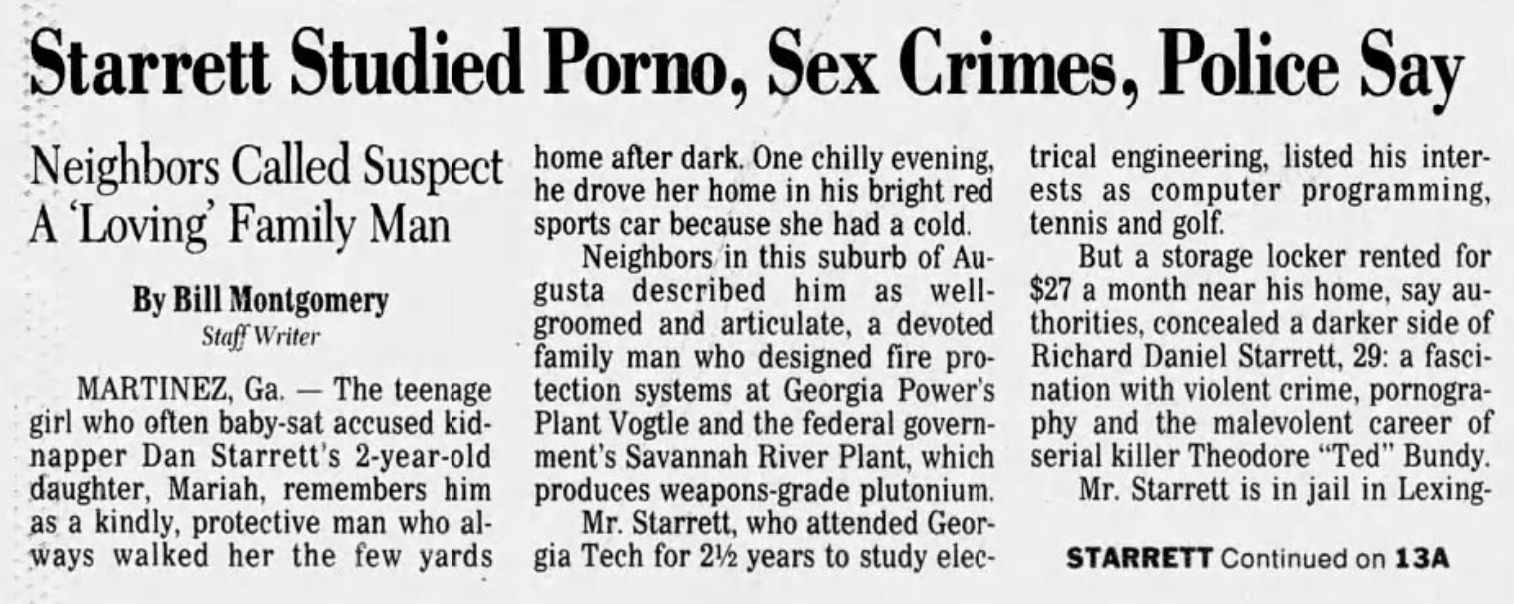
There was also an impressive book and article collection that highlighted his fascination with notorious serial killer Ted Bundy. Police believed some of Bundy’s more unusual tactics were visible in Starrett’s crimes, and that he was intentionally emulating him.
Starrett was also in possession of police and detective materials and criminology textbooks about law enforcement investigations. And there was a video camera mounted on a tripod, and the videotape found in the VCR showcasing his most recent sexual assault.
Starrett confessed to having killed his previous victim, and led police to her body. She was still listed as a missing person at the time.
Starrett and Mr Cruel shared so many unusual features. They both used ruses, they both recorded their assaults, and they both seemed to be role-playing a fantasy. Starrett’s study of policing also offered insight into how Mr Cruel might have learnt his trade - through self-learning - rather than being a police officer like so many theories propose.
What shocked police most of all was how Starrett operated under the radar. All they had known previously was that there was some unidentified local criminal and rapist operating in their neighborhood. They had no idea who it was, and people who knew Starrett never suspected it was him.
The level of planning and intensity sitting behind Starrett's attacks made police reconsider whether that was even all he was. He didn't match any other serial rapist they knew. They had seen this unusual activity before, but only in serial killers.
Police quickly upgraded their profile, with Starrett suspected of being a prolific serial killer who may have operated undetected across multiple states over many years.
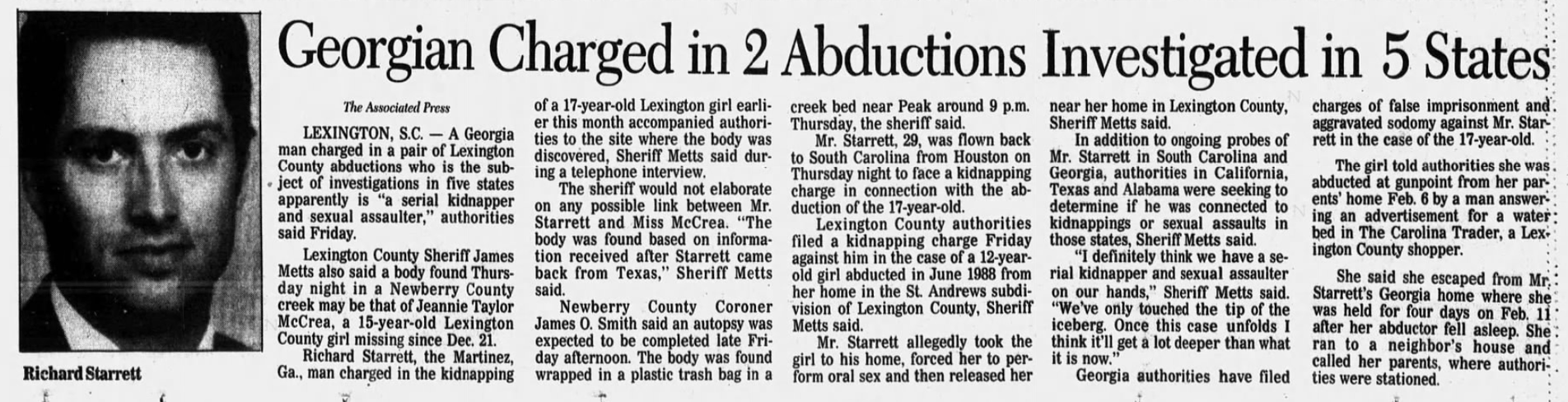
This is the profile of the offender Victoria Police believed was the most similar to the one that had kidnapped and killed Karmein Chan. And sources claimed that when they had first heard about Starrett, they had even thought he might be Mr Cruel, but checks confirmed that Starrett had never travelled to Australia.
Starrett certainly doesn't sound like the Mr Cruel profile Victoria Police presented to the public. So why were they so interested?
Turns out Victoria Police's profile of Mr Cruel was nothing like what they've been selling us.
The connection to the Golden State Killer
Many of you would have heard about Joseph James DeAngelo, the Golden State Killer who was arrested in 2018.
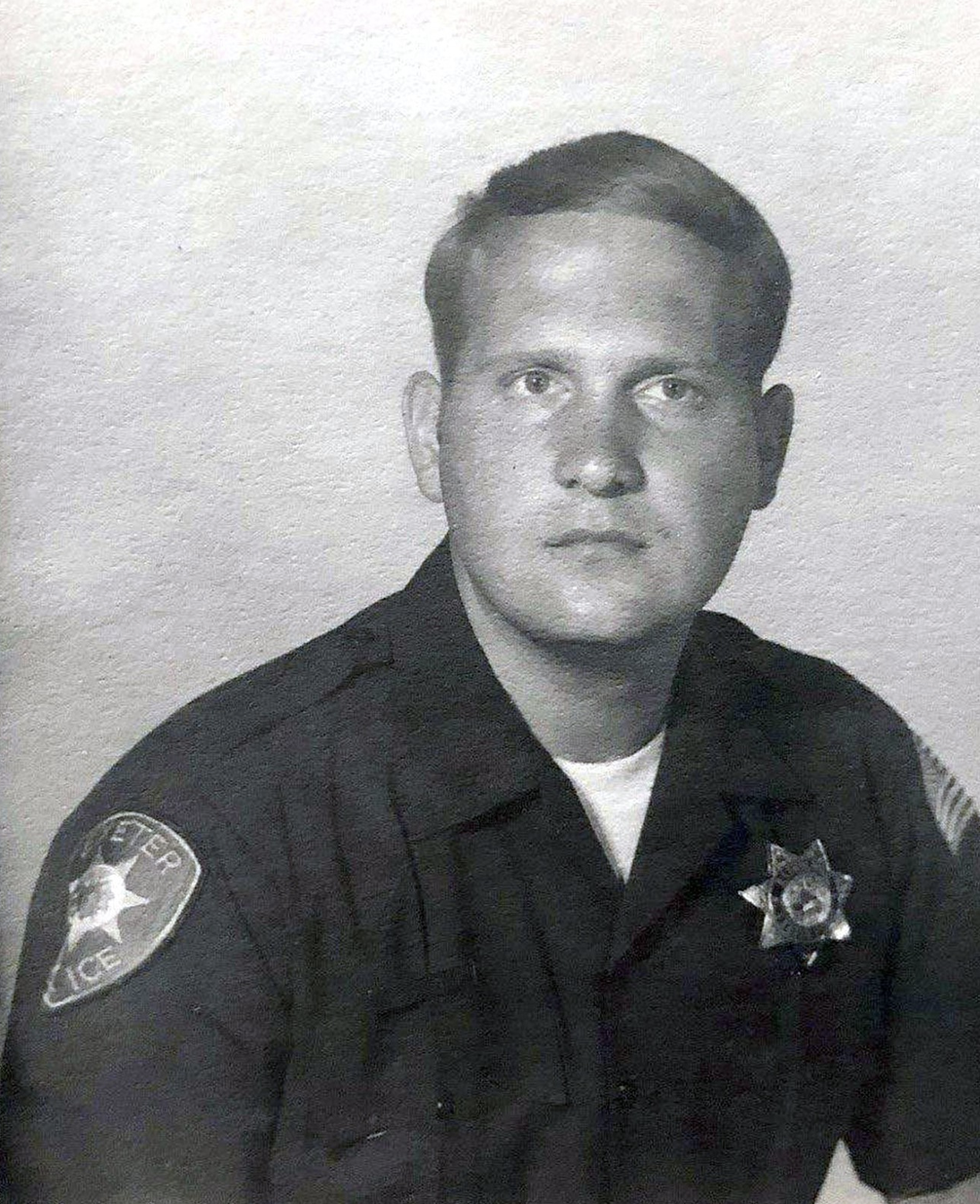
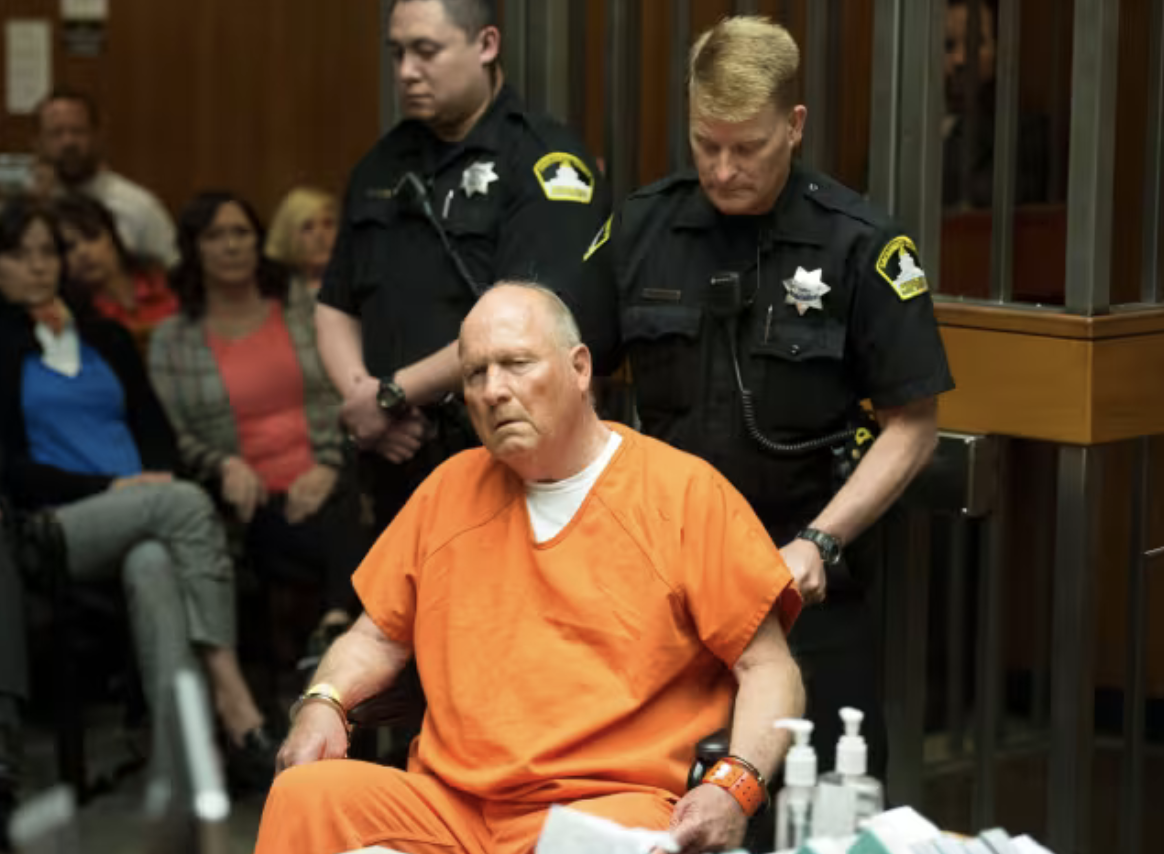
De'Angelo in his official police force photo (left). And (right) at his arraignment in the California Superior Court in Sacramento in April 2018. Images courtesy of the LA Times and NBC news.
He committed at least 13 murders, 51 rapes, and 120 burglaries across California between 1974 and 1986. The crimes fell into distinct groups, each with a different temporal and geographical patterns, and the police, for many years, failed to link them together. So strong was the belief that these crimes were all committed by separate offenders, that DeAngelo earned himself a new nickname for each of the clusters.
First, there was the Visalia Ransacker who committed a spate of odd burglaries between 1974 and 1976 in central California. This offender disappeared, replaced by a new one about 3 hours away in the eastern neighbourhoods of Sacramento. Linked to this offender was also a smattering of similar attacks about 1 hour away on the East Bay of the San Francisco Bay area. Plus a few others situated on the road back in the direction towards Visalia. This 2nd offender was known as the East Area Rapist and operated between 1976 and 1979.
When this offender then disappeared in 1979, a new one showed up in the greater Los Angeles areas of Santa Barbara, Ventura and Orange Counties. This 3rd offender earned the nickname The Night Stalker, which was later changed to the “Original Night Stalker” when another younger serial killer who was given the same name was captured in another part of the country.
This offender then seemed to disappear off the face of the earth in 1981, making people wonder what happened to him. Was he dead? Did he move away? Perhaps he was in jail. But then he made a brief return in 1986 to sexually assault and murder one more woman before skulking off again into the shadows.
In 2001, DNA evidence finally connected the three separate crime sprees together. The Visalia Ransacker, the East Area Rapist and the Original Night Stalker were one and the same. This unknown perpetrator then became known as the Golden State Killer.
In 2016, the FBI made one final push to crack the cold case, offering a (paltry) $US50,000 reward for information leading to the arrest of the “prolific serial rapist and murderer”.
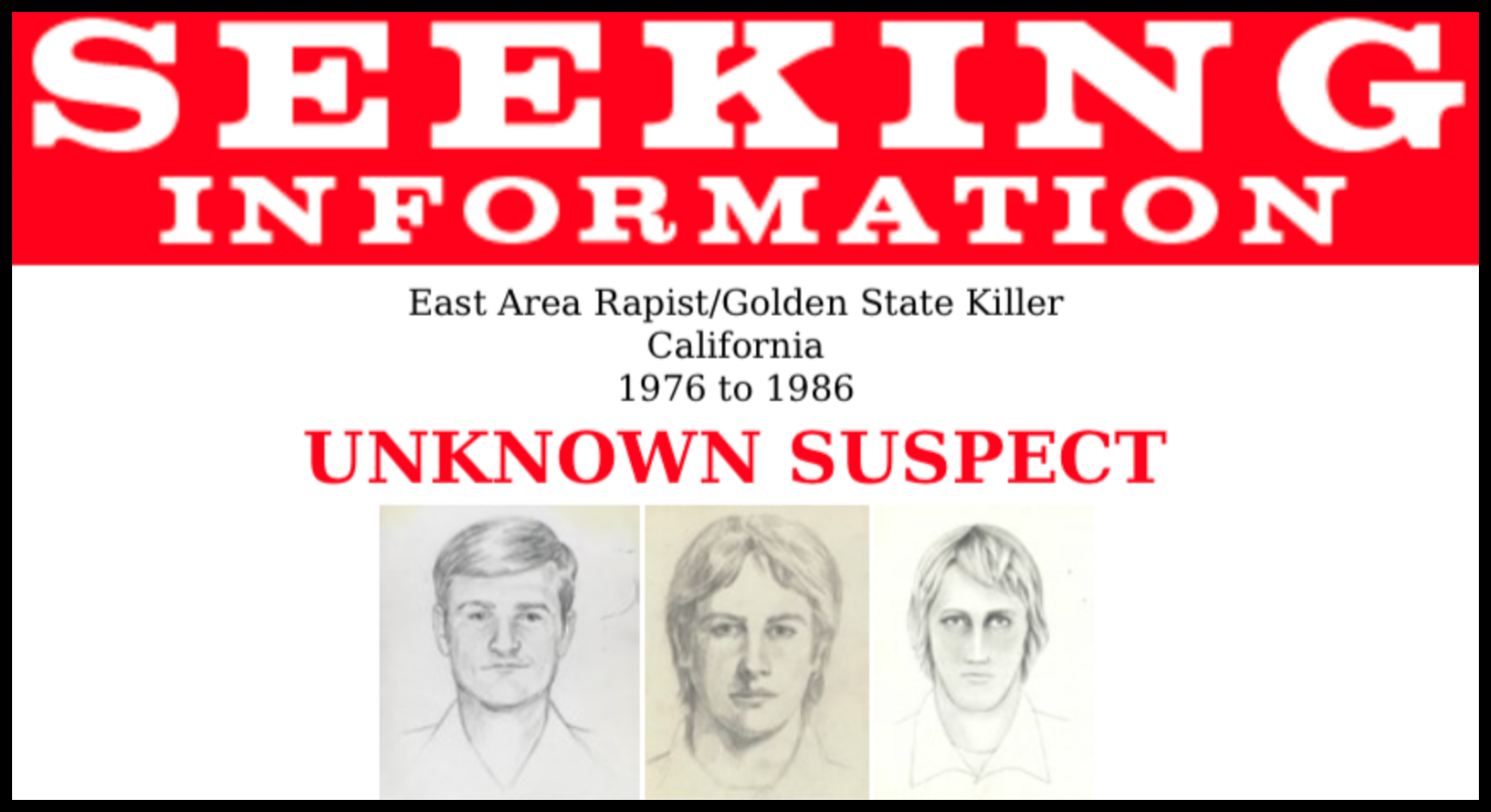
Upon seeing the media report, a retired Los Angeles County Sheriff’s Department detective thought this most-wanted perpetrator sounded an awful lot like a different burglar he had been investigating in the 1980s. He described his burglar as “a nasty piece of work” that sported the same clean-cut image as this Golden State Killer.
And most concerning, was that this offender had actually moved to Australia, and later died in a car accident. This criminal and travel history was a potential fit to Mr Cruel whose background was unknown, and who seemingly disappeared into thin air in the 1990s. Dying in a car crash offers a plausible explanation for why that happened.
The FBI agreed there was enough similarity to contact the Australian authorities, proposing the possibility that the reason that that the Golden State Killer appeared to disappear in the mid-1980s, was because he had moved to Melbourne where he became Mr Cruel.
There were so many shared features. Both took breaks to eat meals in their victims' homes. Both monitored the news and changed their tactics accordingly. And both were highly competent in breaking into secure homes and restraining victims.
But the FBI wouldn't have phoned up the Aussies because they thought their prolific serial killer shared some low-level traits common to many rapists. Otherwise they would have inquired after tens of thousands of rapists. But they didn't. They inquired about Mr Cruel specifically.
There was something in their understanding of Mr Cruel that had him pegged as a highly sophisticated criminal on par with The Golden State Killer. But who did the FBI get that idea from? Surely they don't routinely and independently take a red marker to the files of international criminals and cross out the findings of the actual investigating police force. Their file on Mr Cruel must have already told them he was capable or perhaps ever suspected of Golden State Killer-like crimes. And that must have come from Australian Police.
When the story broke, Victoria Police confirmed they had investigated the theory but ruled it out. They gave a vague statement about sexual offenders sharing behavioral traits. But if they still believed Mr Cruel was just a "gentle" paedophile, why didn't they say so? Why didn't they just point out to the suspicious journalists that the reason they dismissed the idea was because the two offenders had entirely different objectives, and that there was no evidence of Mr Cruel being a serial killer like the one the FBI was looking for.
They didn't say it because it was no longer true.
Stubborn, old school policing techniques continue to hinder historical case investigations
In time we would learn that Joseph DeAngelo evolved over decades from a cat burglar, to a serial rapist, to a sadistic murderer, seamlessly crossing jurisdictions and changing his modus operandi to evade capture. And he got away with it because most police refused to see the similarities between the crimes, and only saw the differences.
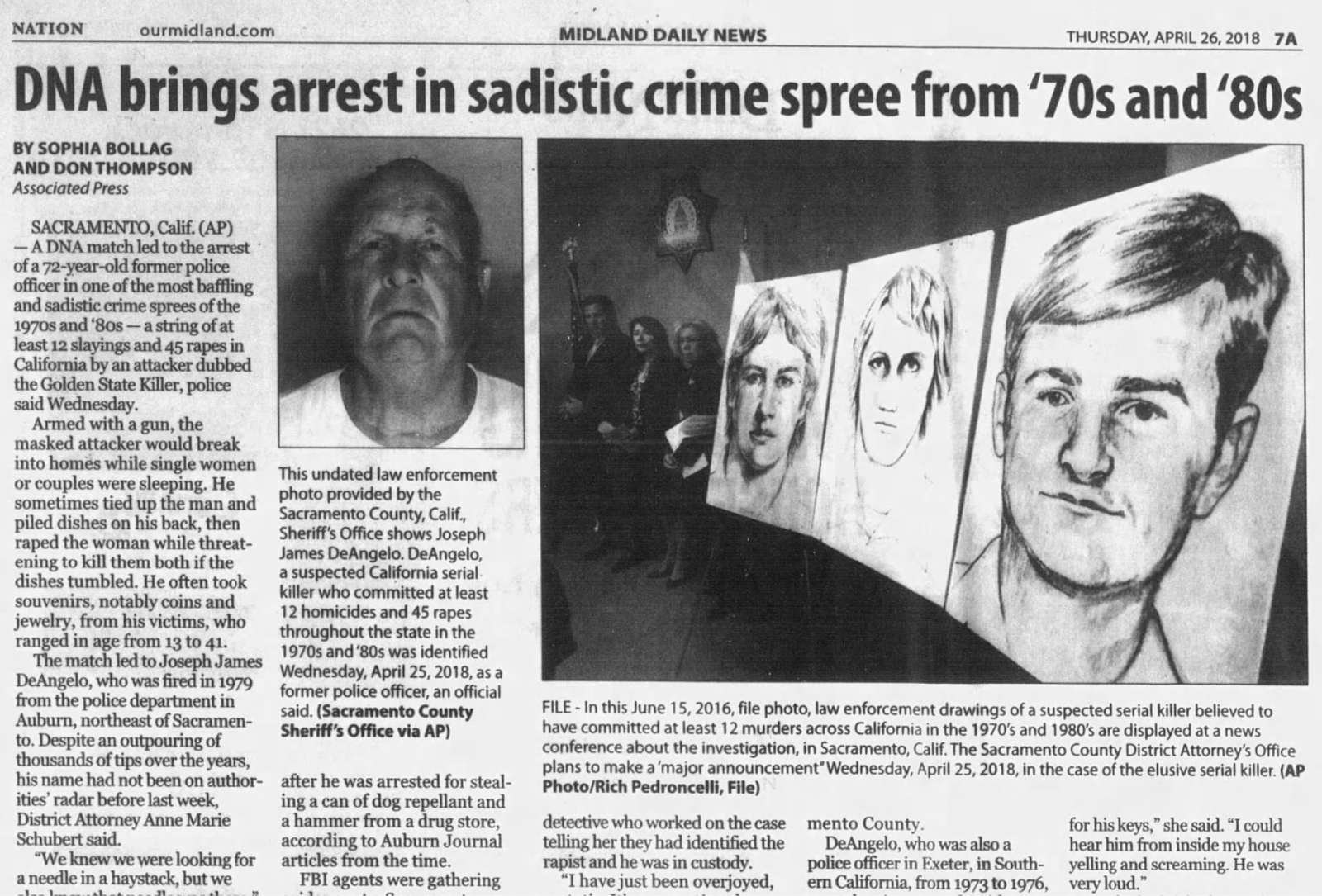
For decades, a stubborn group of police officers berated any colleagues who suggested that the Visalia Ransacker burglar, the East Area Rapist and the Original Night Stalker serial killer were one and the same.
Does Victoria Police know or suspect Mr Cruel is a serial killer?
Whilst the police were chasing the wrong type of offender early on in the investigation, it doesn't seem like it too them that long to realise the FBI profile was a dud. The mirror they eventually held up to Mr Cruel did not show a run-of-the-mill rapist. The face resembled Joseph DeAngelo.

But the record hasn't been updated. The public is still under the impression that Mr Cruel was a paedophile who committed a few home invasions and one panicky murder. And that is why people haven't been able to see his signal in the public records they have been searching through. They aren't looking for him in the right place. "Routine" child molesters are not his peers.
If the police believed Mr Cruel shared DeAngelo's operational DNA, then someone knows that Mr Cruel wasn't just a short-term sex offender. Someone suspects he was a prolific burglar, and someone suspects he was a serial killer.
Looking at Mr Cruel through a serial killer lens
These associations between Mr Cruel and Starrett and DeAngelo are not benign. They're not just stories. Their names have come up in this context because there is something about these two American offenders that they share in common with Mr Cruel.
Yet no one in the public sphere of Mr Cruel is looking for someone like Starrett or DeAngelo. They're looking at people with long, sexual assault rap sheets who lack the critical experience and skills to plausibly be responsible for Mr Cruel's crimes.
Mr Cruel was never "just" a rapist, nor a paedophile. He was a violent serial offender, and the evidence I have found suggests that Karmein Chan was not the first girl he had killed. He left his signature and calling card all over town, but you can’t see them if you’re not looking in the right place.
